8 Customer Segmentation Example Ideas for DTC Growth
By Arthur Falcone · Founder of Arlo
It's Monday morning. You open Shopify and see the same problem again. Traffic is coming in, carts are getting started, and revenue still feels stuck because you're sending broad campaigns to people who should be getting very different messages.
That is why customer segmentation matters. Founders do not need another list of textbook segment types. They need a short list of segments they can build in Shopify, Klaviyo, and their CRM, then use to drive more repeat purchases, better conversion, and fewer wasted sends.
Generic targeting creates predictable problems. Win-back emails hit people who were never a fit. Discounts go to customers who would have bought at full price. Paid traffic keeps feeding audiences that look good in reports and weak in contribution margin. If your goal is stronger retention, higher order value, and better revenue per recipient, start with segments that connect directly to profit. These proven tactics for increasing customer lifetime value are a useful complement if LTV is your main priority.
If you're also evaluating your stack, this guide on finding CRM tools for Plus stores is worth bookmarking.
This article gives you 8 specific, high-impact segments you can build and act on this week. For each one, you'll get the reason it matters, how to define it, and what to do with it once it exists.
#Table of Contents
- 1. The High-LTV Demographic
- 2. The About to Churn Segment
- 3. The High-Intent Window Shopper
- 4. The VIP Champions RFM
- 5. The First-Time Buyer 0-30 Days
- 6. The Geographically Clustered Growth Market
- 7. The Values-Aligned Buyer Psychographic
- 8. The Profitable vs Unprofitable Customer Value-Based
- Comparison of 8 Customer Segments
- From Segments to Strategy
#1. The High-LTV Demographic
You open Ads Manager and see three audiences converting. One looks cheaper on the first order. Another produces customers who come back, spend more, and need less discounting. That second group deserves your budget.
This is the demographic segment to build first if you want a practical win from segmentation this week. Not because demographics are magic. Because demographic patterns tied to LTV help you stop funding low-quality acquisition.
#Start with your buyers, not your assumptions
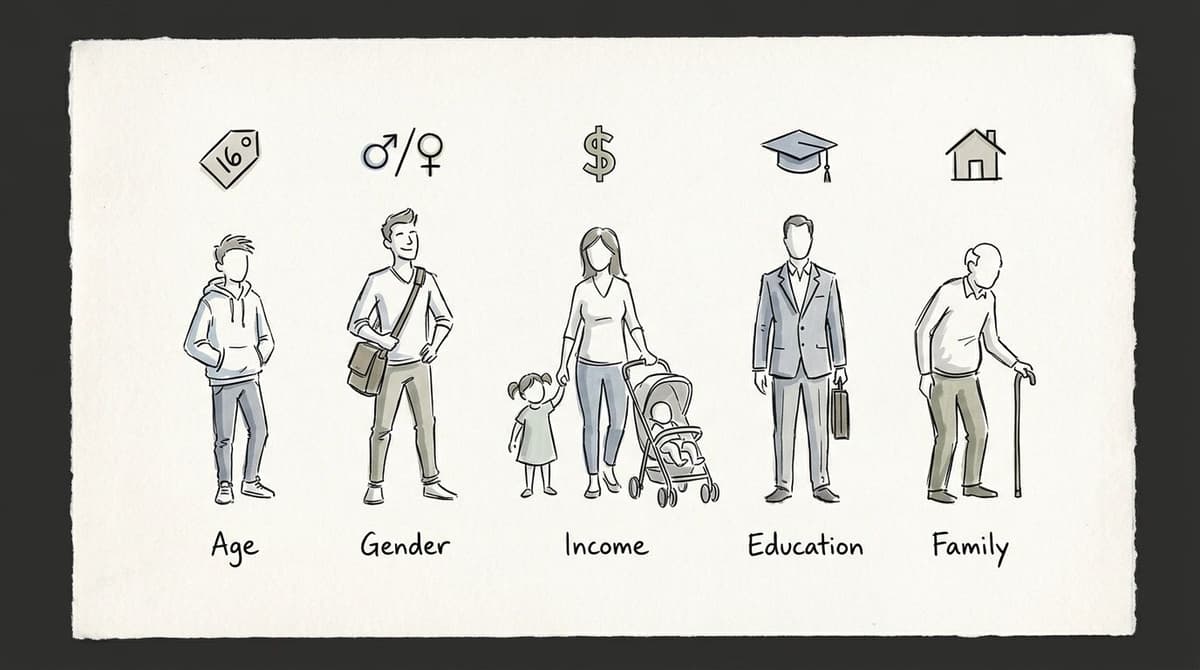
Pull your top customers first. Use a simple cut: highest lifetime value, repeat buyers, or strongest 90-day payback if you track it. Then look for traits you can use in media buying and merchandising, such as age range, gender, region, family status, or income proxy.
The mistake is stopping at a broad label. "Women 30 to 45" is not a strategy. "Women 30 to 45 in suburban ZIP codes who buy bundles and place a second order within 45 days" is a segment you can target, message, and measure.
As noted earlier, behavior should lead and demographics should refine. You are not trying to stereotype your customer. You are trying to find the demographic slice that shows up again and again inside your best revenue cohorts.
Use this segment in three places right away:
- Acquisition creative: Show the use case, objections, and outcomes that fit this group's buying behavior.
- Landing pages: Match imagery, bundles, reviews, and product emphasis to the customers already driving strong repeat revenue.
- Email campaigns: Feature products and offers that fit their actual purchase pattern instead of blasting the full catalog.
Here's the rule. If the demographic group does not outperform on repeat rate, AOV, or retention, it does not deserve more spend.
Run a clean comparison against the rest of your customer base. If this high-LTV demographic also gives you efficient CAC, commit more budget there. If it converts on the first order but falls apart on retention, treat it as a volume segment, not a growth segment.
That distinction matters. A lot of Shopify brands scale the wrong audience because they optimize for the first purchase and call it success.
If you want to improve retention after you identify this segment, these proven tactics for increasing customer lifetime value fit well with this play.
#2. The About to Churn Segment
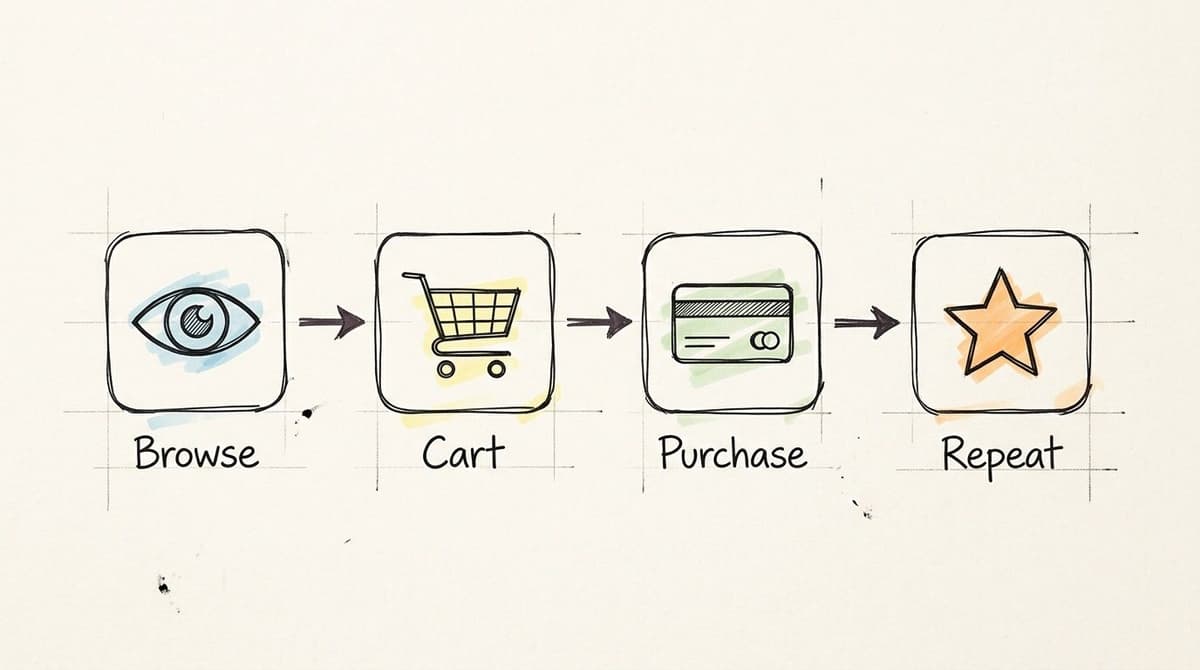
A customer who bought from you twice, liked the product, and then slipped off their normal schedule is one of the easiest wins in your Shopify store. They already crossed the hardest line. They trusted you enough to buy. Your job is to catch the drop in momentum before it turns into a true lapse.
Set this segment by expected reorder timing, not by a generic “inactive for 60 days” rule. A customer who buys protein every 30 days should not sit in the same churn logic as someone who buys a seasonal bundle every 90. Good churn segmentation is tied to product cadence, email engagement, and recent order behavior. Shopify and Klaviyo give you enough to build this this week.
#Build the segment around broken buying patterns
As noted earlier, lifecycle segmentation works because it helps you act before revenue disappears. For this segment, use a rolling trigger such as:
- Past repeat buyer: At least 2 orders, or 2 consecutive orders in the same category
- Expected reorder window missed: Based on that product's normal repurchase cycle
- Engagement fading: Fewer opens, fewer clicks, or no site visit since the last order
- No recent support issue resolved with a replacement: Exclude customers whose delay has an obvious operational cause
That last point matters more than founders think. If the customer is waiting on a subscription skip, a delayed shipment, or a damaged-order replacement, a win-back email is the wrong move.
#Use a 3-step recovery sequence
Do not jump straight to a discount. That burns margin and trains people to wait.
Run this sequence instead:
- Reminder: Refill or reorder prompt tied to the product they bought
- Reason to return: Education, outcomes, new bundle logic, or proof from similar buyers
- Offer: A controlled incentive only after the first two touches fail
This structure keeps the message aligned with intent. A customer who forgot needs a nudge. A customer who lost interest needs a reason. Only the last group needs a price push.
The lazy version of this segment is the generic “we miss you” campaign. Skip it. It says nothing specific, and it usually goes to people with completely different reasons for delaying a purchase.
A better customer segmentation example is a supplement brand identifying shoppers who placed 2 back-to-back orders, missed their next expected replenishment window, and ignored the last 2 brand emails. That group should get a timed replenishment reminder first, then a benefit-focused follow-up, then a tightly controlled offer if they still do not come back.
Track four numbers only: reactivation rate, repeat purchase rate after reactivation, revenue per recipient, and unsubscribe rate. If reactivation is low, your timing is late or your segment is too broad. If unsubscribes climb, your message sounds needy or irrelevant.
This segment pays off because it protects demand you already paid to acquire. Founders who treat churn prevention as a weekly operating task usually keep more revenue without adding acquisition spend.
#3. The High-Intent Window Shopper
A shopper lands on the same product page three times in two days, reads reviews, uses search, starts checkout, then leaves. That person is close. If you treat them like cold traffic, you waste one of the easiest revenue opportunities in your Shopify store.
This segment matters because intent is already visible. You do not need broad brand storytelling here. You need to remove the specific reason the shopper stalled.
#Build the segment around buying signals
High-intent window shoppers usually show a tight cluster of behaviors in a short time window. Start with shoppers who meet two or more of these conditions:
- Viewed the same product multiple times
- Visited multiple PDPs in one category
- Used on-site search
- Added to cart or started checkout
- Did not purchase within 24 to 72 hours
Keep the window short. If you wait a week, intent cools off and your message loses relevance.
Then split the segment by behavior, not by broad audience labels. A searcher needs help choosing. A repeat PDP viewer usually needs proof or clarity. A cart starter often needs friction removed, such as shipping cost, delivery timing, or return policy.
A good customer segmentation example is a skincare brand separating high-intent shoppers into two groups. One group keeps viewing ingredient pages and search terms tied to concerns like acne or dryness. Send them education, before-and-after proof, and the product best matched to that concern. The second group browses sets and routines. Send them a routine builder, a bundle, and a clear "start here" path.
#Match the message to the hesitation
Do not send one generic browse-abandon flow to everyone in this segment. That is lazy marketing.
Use a simple framework:
- Repeat product viewers: Reviews, UGC, FAQs, ingredient or material details, outcome-focused proof
- Category browsers: Comparison content, quiz or buying guide, best-seller ranking
- Cart or checkout starters: Shipping clarity, return policy, payment options, low-stock or time-based urgency if it is real
Keep the creative specific. Show the exact product they viewed, the result they want, and the next step to buy. If they were already deep on a PDP yesterday, your brand origin story is the wrong message.
Run this segment through both email and retargeting. Use the same angle in both channels so the shopper gets one clear case to buy, not three different messages from three different teams.
Track four numbers: recovery rate, time to purchase, revenue per recipient, and conversion rate by behavior bucket. If repeat PDP viewers convert but category browsers do not, your segment is too broad or your message is too early. Fix the logic before you add more spend.
#4. The VIP Champions RFM

A founder checks last month's revenue, sees a solid number, then runs a broad discount to keep sales up. The problem is obvious. Their best customers get the same treatment as everyone else, margin drops, and the people who would have bought anyway learn to wait for promos.
Your VIP segment should never sit inside the general campaign list. Give it its own logic, reporting, and offer strategy.
RFM is the fastest way to build that segment in Shopify this week. Score customers on recency, frequency, and monetary value. Then isolate the group that bought recently, buys often, and spends at the top end of your file. That is your VIP Champions segment.
#Build the segment with rules you can actually use
Keep it simple. You do not need a fancy model to get value from this.
Start with customers who meet criteria like these:
- Recent: Purchased in the last 30 to 90 days
- Frequent: Placed 3 or more orders
- High value: Total spend or average order value in your top tier
Adjust the thresholds to fit your category. A skincare brand with fast replenishment can use tighter recency windows. A furniture brand needs longer ones. The point is to identify customers with proven buying momentum and proven commercial value.
This group matters for a different reason than the churn segment or the window shopper segment. You are not trying to rescue them or convert them. You are trying to protect them, grow them, and avoid training them to buy on discount.
#Treat VIPs like revenue assets
A weak VIP strategy is “send them the same campaigns, then add a coupon code.” That is lazy and expensive.
Use a better playbook:
- Give early access to launches, limited drops, and restocks
- Offer exclusive bundles that raise AOV without cutting price
- Send direct communication that feels intentional and specific
- Exclude them from heavy markdown pushes unless there is a real retention reason
- Watch for slowdown signals like longer gaps between orders or lower basket size
Status beats discount for this segment. Convenience beats discount too. Reserved inventory, faster support, subscription upgrades, product previews, and personalized recommendations all protect margin better than another 15 percent off email.
Operator move: Build one campaign calendar for VIPs and a different one for everyone else.
A practical customer segmentation example is an apparel brand pulling customers with recent purchases, repeat order history, and top-tier spend into a VIP Champions audience. Instead of blasting them with sitewide sales, the brand gives them first access to limited collections, private bundles, and early restock alerts. That keeps the relationship premium and keeps contribution margin healthier.
Track this segment like an operator. Watch repeat purchase rate, average days between orders, AOV, and share of revenue. If VIP revenue is flat but discount usage is rising, your retention strategy is slipping. Fix the offer structure before you spend more to replace customers you already had.
#5. The First-Time Buyer 0-30 Days
A customer places their first order on Monday. By Friday, your acquisition team has moved on, your email calendar has moved on, and the customer is getting the same generic promos as everyone else. That is how brands train first-time buyers to stay one-time buyers.
Treat the first 30 days like a conversion window, not a cooldown period. The first order proves your ad, offer, or product page worked once. The next order proves you have a retention engine.
This segment needs its own flow, its own reporting, and a clear second-purchase plan. If you sell consumables, replenishable products, or anything habit-based, the clock starts the moment the first order is placed.
#Build the path to order two before the first order ships
New buyers should not get the same campaign mix as repeat customers. They need guidance, reassurance, and a reason to come back before attention fades.
Focus on three jobs in this window:
- Confirm the decision: Reinforce why they bought and what result they should expect.
- Help them use the product correctly: Teach setup, usage, timing, or routines so the product works for them.
- Create the next purchase trigger: Recommend the refill, companion product, or next step before they have to guess.
Founders often miss the actual problem here. It is not weak top-of-funnel demand. It is a sloppy post-purchase experience. Order confirmation and shipping updates are not a retention strategy.
A strong customer segmentation example is a coffee brand that sends brew instructions based on roast type, a check-in after delivery, and a reorder prompt timed to expected consumption. A supplement brand should send habit-building guidance and replenishment reminders. A beauty brand should map the first product into a simple regimen, then introduce the next best product in sequence.
Keep this practical. Set up a 0-30 day segment in Shopify or your ESP based on first purchase date. Exclude these customers from your standard promo calendar for the first few weeks. Then build a short post-purchase flow around product success, not discounts.
Track second-order rate, time to second purchase, support tickets, and clicks on post-purchase education. If first-time buyers are opening emails but not buying again, your offer path is weak. If they are not engaging after delivery, your onboarding is weak. Fix that before spending more on acquisition.
#6. The Geographically Clustered Growth Market
Most brands know their biggest states or cities. That's not enough. The better move is to find smaller pockets where demand is strengthening faster than average.
This segment isn't about vanity maps. It's about identifying where local efficiency is emerging so you can lean in before competitors do.
#Look for momentum, not just size
Geographic segmentation gets more useful when you stop asking “where are most orders coming from?” and start asking “where are results getting better?” Look for places where conversion quality, repeat buying, or interest is unexpectedly strong relative to your average.
Common signals include:
- Growing order density: More customers from the same region over time.
- Better AOV: Certain markets may buy premium bundles more often.
- Faster repeat purchase behavior: Some regions become retention strongholds.
- Lower friction: Shipping speed or product-market fit may be stronger there.
This customer segmentation example works especially well for brands with regional relevance. Think outerwear, food and beverage, sports-specific products, or brands with community-led growth. If a smaller metro starts overperforming, build localized paid social, region-specific email creative, or landing pages that reflect local context.
Don't localize everywhere. Localize where your data already shows traction.
A practical scenario: a hydration brand notices one cluster of college towns driving repeat orders and strong engagement. That doesn't mean launching a national student campaign. It means testing paid social creative and ambassador outreach in those towns first.
Shopify, Google Analytics, and your ad platforms are enough to spot this if you review them with discipline. You don't need a CDP to start. You need the habit of looking for geographic momentum instead of aggregate volume.
#7. The Values-Aligned Buyer Psychographic
A founder sees strong conversion on a sustainability campaign and assumes the whole customer base cares about sustainability. Then the next email underperforms, paid social gets expensive, and the brand starts sounding confused. The problem is not values-based messaging. The problem is sending it to everyone.
Psychographic segmentation only works when you build it from behavior customers have shown. Start there. What pages did they read? Which products did they choose? What words do they use in reviews, surveys, and support tickets? That is how you identify a values-aligned buyer you can market to this week in Shopify.
#Build this segment from signals, not assumptions
Use a simple rule: a customer joins this segment after showing at least two or three values-coded actions.
Good inputs include:
- Survey responses: What customers say matters to them, such as sustainability, durability, design, wellness, or local production.
- Content engagement: Visits or clicks on pages about sourcing, materials, craftsmanship, community, or mission.
- Product selection: SKUs that reflect a clear preference, like refill packs, premium natural materials, limited artisan runs, or minimalist collections.
- Review and support language: Repeated phrases like “less waste,” “built to last,” “clean ingredients,” or “love the design.”
One signal is weak. A pattern is useful.
If you run a mission-led brand, stop sending this group generic promotional creative. Give them the reason your brand exists. Lead with sourcing, product standards, longevity, design philosophy, or community identity. If you train these customers to wait for discounts, you weaken the exact positioning that made them buy.
A practical customer segmentation example: a home goods brand separates “minimalist design buyers” from “gift-driven seasonal buyers.” Same catalog, different reason to purchase. The minimalist segment gets editorial photography, founder notes, and product pages that explain materials and form. The seasonal segment gets bundles, deadlines, and gifting language.
This segment also protects your brand from lazy messaging decisions. If values-aligned buyers convert, repeat, and engage at a higher rate when the creative reflects their motivation, keep investing there. Do not flatten your brand to chase short-term promo clicks.
For Shopify brands, the setup is straightforward. Tag survey responses, track key page views, group related SKUs, and review customer language every month. You do not need perfect psychographic data. You need enough evidence to separate belief-driven buyers from convenience-driven buyers, then market to each group like you understand why they came in the first place.
#8. The Profitable vs Unprofitable Customer Value-Based
A founder sees a customer with five orders and assumes they are valuable. Then finance looks closer. The customer bought on heavy discounts, returned two orders, came through an expensive paid channel, and never buys full price. Revenue showed activity. Profit showed a problem.
That is why this segment belongs in your Shopify setup this week. You need to split customers by economic quality, not just top-line spend. If you do not, you keep feeding budget into buyers who make the dashboard look healthy while margin gets worse.
#Segment for contribution, not just revenue
Start with a simple question. Which customers leave you actual profit after discounts, returns, shipping subsidies, and acquisition cost?
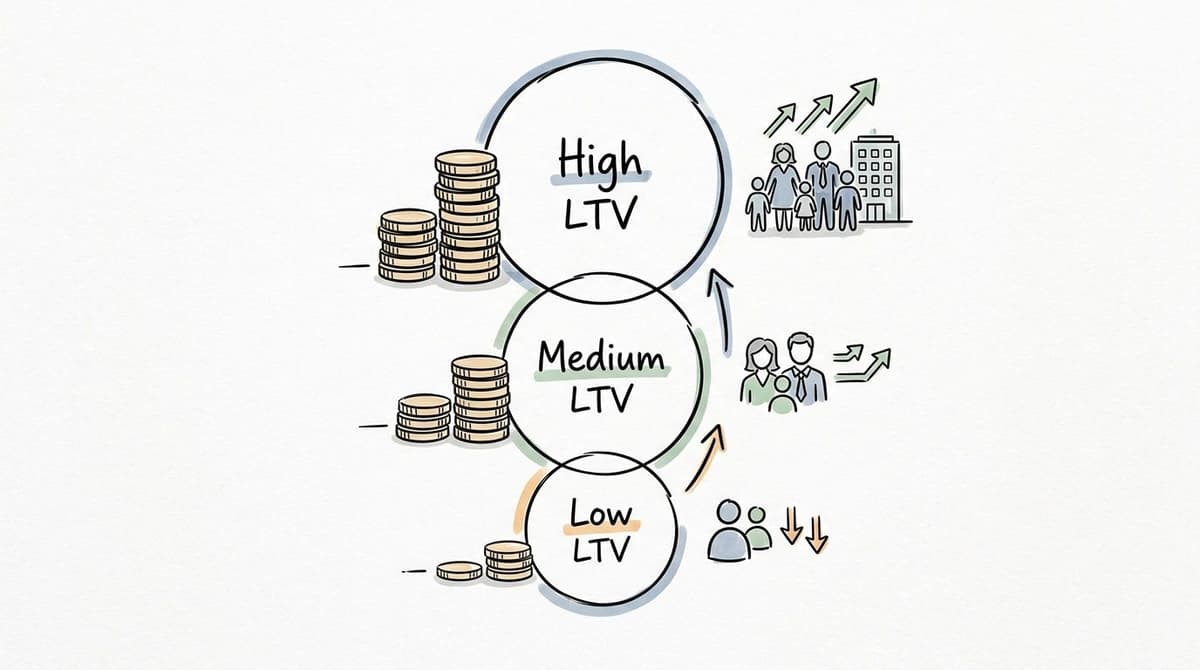
That gives you two usable groups. Profitable customers are worth retaining, replicating, and protecting. Unprofitable customers need a different offer structure, stricter acquisition rules, or less spend.
Use five signals to build the segment:
- Order value: Who buys enough to support healthy margin.
- Discount usage: Who waits for promotions and erodes gross profit.
- Returns and refunds: Who creates post-purchase cost.
- Acquisition source: Who came in through channels that are too expensive to support.
- Repeat purchase quality: Who comes back in a way that improves payback, not just order count.
Do not overcomplicate the first pass. Even a basic customer tag system is enough. Create one group for high-margin repeat buyers and one for customers with weak or negative contribution. When you outgrow tags, profit analytics tools automate the blending. Our Lifetimely pricing and alternatives breakdown covers the established option in that lane and where it stops.
A useful example comes from Black Diamond. Lexer's retail case study shows how the brand used behavioral and RFM segmentation to target higher-value and lapsed customers with more precision in Lexer's segmentation case study collection. The lesson is straightforward. Better segments produce better budget decisions.
The action matters more than the label. Profitable customers should get early access, stronger retention flows, and lookalike audiences built from their profile. Unprofitable customers should see fewer blanket discounts, higher free shipping thresholds, bundle-led offers, and less paid retargeting.
Some customers can be fixed. Many just need better merchandising and pricing rules. Others should stop getting expensive attention.
If you only remember one thing from this customer segmentation example, remember this. Revenue is a vanity metric when contribution margin is weak. Segment for profit first. Then scale.
#Comparison of 8 Customer Segments
| Segment | Implementation Complexity 🔄 | Resource Requirements ⚡ | Expected Outcomes ⭐📊 | Ideal Use Cases 💡 | Key Advantages |
|---|---|---|---|---|---|
| The High-LTV Demographic | Medium, combine purchase history with demo enrichment and lookalikes 🔄 | Medium, CRM segments, enrichment tools (Clearbit), ad budget | High, lifts LTV:CAC by ~15–30% ⭐📊 | Scale acquisition toward most profitable customers | Concentrates spend on highest-value buyers; improves unit economics |
| The "About to Churn" Segment | Low–Medium, time-window rules and automated win‑back flows 🔄 | Low, email/SMS flows, re‑engagement ads, incentives ⚡ | Medium–High, can cut churn 5–10% and recover revenue ⭐📊 | Retention teams focused on reducing churn quickly | Most cost-effective revenue recovery vs. new acquisition |
| The High-Intent "Window Shopper" | Low, retargeting audiences and exit pop-ups; fast to deploy 🔄 | Low, retargeting pixels, pop‑up apps, dynamic ads ⚡ | Medium, conversion uplift ~0.5–1.5% ⭐📊 | CRO and short‑term revenue lift from site traffic | Quick wins on existing traffic; low CAC to convert |
| The "VIP Champions" (RFM) | Low, RFM modeling is built into many platforms 🔄 | Medium, loyalty/experience investments, exclusive offers | Very High, small group drives large share of revenue ⭐📊 | Protect and grow top 5–10% of customers | Highest-leverage segment for profit and advocacy |
| The First-Time Buyer (0–30 Days) | Low, standard post‑purchase flows and onboarding 🔄 | Low, email sequences, packaging, follow-up resources ⚡ | High, increases chance of second purchase (>40% uplift) ⭐📊 | Onboarding to boost repeat purchases and LTV | Improves early retention; multiplies lifetime value |
| Geographically Clustered Growth Market | Low, analytics + geo‑targeted campaigns 🔄 | Low–Medium, geo‑fenced ads, local partnerships, creative | Medium, efficient pockets of growth and lower CAC ⭐📊 | Test market expansion and localized acquisition | Early-mover advantage in rising regional markets |
| The "Values-Aligned" Buyer (Psychographic) | Medium, needs product tagging + engagement tracking 🔄 | Medium, content, community programs, surveys | Medium sales, High long‑term brand equity ⭐📊 | Brand-building and resilient customer base initiatives | Strong advocacy, lower price sensitivity, moat-building |
| Profitable vs. Unprofitable Customer (Value‑Based) | High, requires profit analytics and cross-source data blending 🔄 | High, profit tools (Lifetimely), data engineering, ad attribution | Very High, improves margins without revenue growth ⭐📊 | Strategic margin improvements and channel optimization | Focuses business on profitability rather than vanity revenue |
#From Segments to Strategy
Monday morning. Your team is staring at five dashboards, three campaign ideas, and a customer list that is too broad to act on. By Friday, nothing meaningful changed. Revenue moved because of seasonality, not because marketing got sharper.
That is what segmentation fixes when you use it properly.
The point is not to build a clever taxonomy of your customer base. The point is to pick a few high-impact segments in Shopify, assign each one a specific action, and review the result every week. This article gave you eight segments because they are practical, not because you should launch all eight at once.
Start with two. One defensive, one growth. If you are not sure which two deserve the slots, the free Shopify store health score grades eight core store metrics and ranks the biggest leaks by dollar impact. The weakest metric usually points at the segment to build first.
For most founder-led DTC brands, that means About to Churn and VIP Champions. The churn group protects revenue you are about to lose. The VIP group increases repeat revenue from customers who already trust you. That pairing gives you the fastest feedback loop and the clearest read on whether your segmentation work is affecting the business.
Use this framework:
- Define the segment in one sentence. If your team cannot explain who is in the segment and why they matter, the segment is too messy to use.
- Assign one job to each segment. Win back at-risk buyers. Give VIPs early access. Nurture first-time buyers. Do one thing per segment, not five.
- Pick one primary metric. Reactivation rate, second-purchase rate, AOV, contribution margin, or repeat purchase rate. One segment, one scoreboard.
- Review weekly. Customers move in and out of segments fast. Creative wears out. Offers stop working.
- Shift budget quickly. If a segment responds, increase spend and inventory support. If it does not, change the offer or stop spending on it.
Keep the setup boring. Boring works.
Use Shopify for order history, Klaviyo for email and SMS behavior, your ad platform for acquisition source, and your analytics stack for on-site intent. That is enough to launch useful segmentation this week. You do not need a data team to start, and you do not need to buy a Shopify analytics alternative before your segment definitions are clean. You need clean definitions, a weekly operating cadence, and the discipline to stop blasting the same message to everyone.
The biggest mistake is treating segmentation as reporting instead of execution. A segment only matters if it changes what you send, what you spend, or what you sell. If none of those change, you built an audience label, not a growth system.
If you want a simple rule, use this one: every segment should answer three questions. Who is this group? What are we going to do because they exist? How will we know if it worked?
That same discipline should carry into acquisition. If you are tightening paid social at the same time, these practical notes on optimizing Instagram ad campaigns are a useful companion.
If you want help turning raw Shopify data into segment-based actions without living in dashboards, Arlo is built for exactly that. It gives founder-led DTC brands a weekly “20 Minute CMO” report that highlights what changed, which customer segments matter most right now, and what action is worth taking next.