DTC Journey Intelligence: A Shopify Founder's Action Plan
By Arthur Falcone · Founder of Arlo
You’re probably feeling this already. Sales are coming in, then they dip. Meta says one thing, Shopify says another, Klaviyo has its own story, and GA4 somehow makes everything feel less clear instead of more clear.
That’s the problem with the customer digital journey for most Shopify founders. It isn’t that you have no data. It’s that you have too much disconnected data, and almost none of it tells you what to do on Monday morning.
A lot of advice on journey mapping is too abstract to help an operator. You don’t need another pretty funnel diagram that lives in a slide deck. You need a way to look at messy behavior across ads, email, product pages, checkout, and repeat purchase, then turn that into a short list of actions tied to revenue. That practice has a name: DTC journey intelligence. This guide is the working version of it.
#Table of Contents
- What Is DTC Journey Intelligence
- Why Your Customer Digital Journey Is a Mess
- Mapping the Five Stages of the DTC Journey
- The Key Metrics That Actually Signal Growth
- High-Impact Optimization Tactics for Shopify Stores
- From Data Overload to Decisive Action with Arlo
- Your Weekly Rhythm for Journey Optimization
#What Is DTC Journey Intelligence
DTC journey intelligence is the practice of connecting customer journey data from every channel you own (ads, email, your Shopify store, support) into one view, then using that view to decide what to fix or fund each week. It sits a step above journey mapping. A map shows you the stages. Journey intelligence tells you where the journey is leaking revenue right now and what to do about it.
The term is newer than the problem. Founders have been stitching Meta, Klaviyo, GA4, and Shopify exports together by hand for years. Journey intelligence just names the layer that does the stitching and the interpretation for you. Tools in this space range from journey analytics dashboards, which organize the data and leave the reading to you, to AI analysts like Arlo, which read the data and write the priorities.
Whatever tool you use, the practice is the same, and you can start it this week with the data you already have. The rest of this guide is the how: the five journey stages, the one metric that matters at each stage, and a weekly rhythm for acting on what the data says.
#Why Your Customer Digital Journey Is a Mess
You’re not failing because your funnel is broken. You’re struggling because the old idea of a clean, linear funnel doesn’t match how people buy anymore.
Consumers typically engage with brands 3+ times across digital channels before making a purchase decision, and 90% of businesses believe customer experience is a key differentiator, yet only 20% have a clear understanding of their customers' actual journeys, according to impact.com’s research on the modern customer journey. That gap explains why so many founders feel stuck even when they’re “doing the right things.”
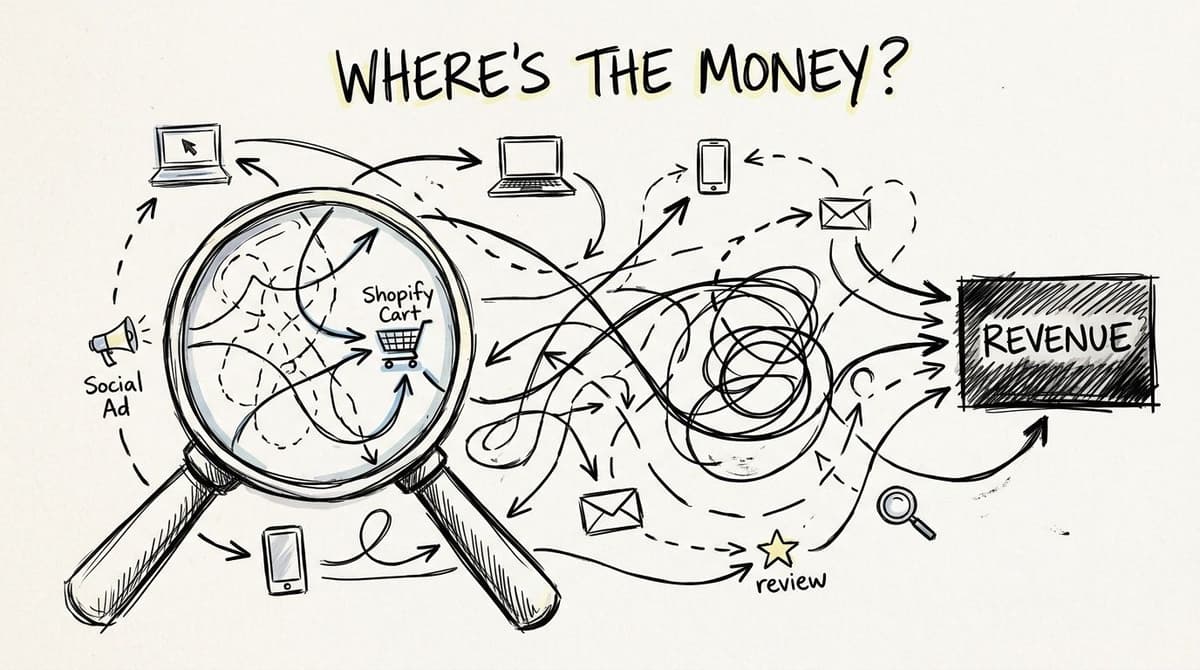
#The black box problem is normal
A customer sees a TikTok, forgets about it, gets retargeted on Instagram, clicks your email two days later, visits on mobile, then buys on desktop after reading reviews. Shopify records the sale. Your ad platform claims credit. Email also looks like it assisted. None of those tools gives you the full story.
That’s why founders end up chasing whatever metric is loudest that week. One week it’s CPM. The next week it’s conversion rate. Then someone says retention is the issue. Usually, all three are connected.
Practical rule: Don’t try to document every click. Identify the moments where buyers hesitate, abandon, or come back.
#The goal isn’t perfect tracking
Perfect attribution is a fantasy for most DTC brands. Useful prioritization is not.
The job is to find the handful of signals that explain why revenue moved. That might be a drop in mobile product-page engagement, a checkout issue on one device type, or a post-purchase flow that stopped driving second orders. Once you see those signals in sequence, the customer digital journey becomes much easier to manage.
If your team also collects customer feedback but struggles to operationalize it, this guide for product teams is worth reading. It’s useful because journey data gets stronger when behavior and voice-of-customer feedback point to the same problem.
#Mapping the Five Stages of the DTC Journey
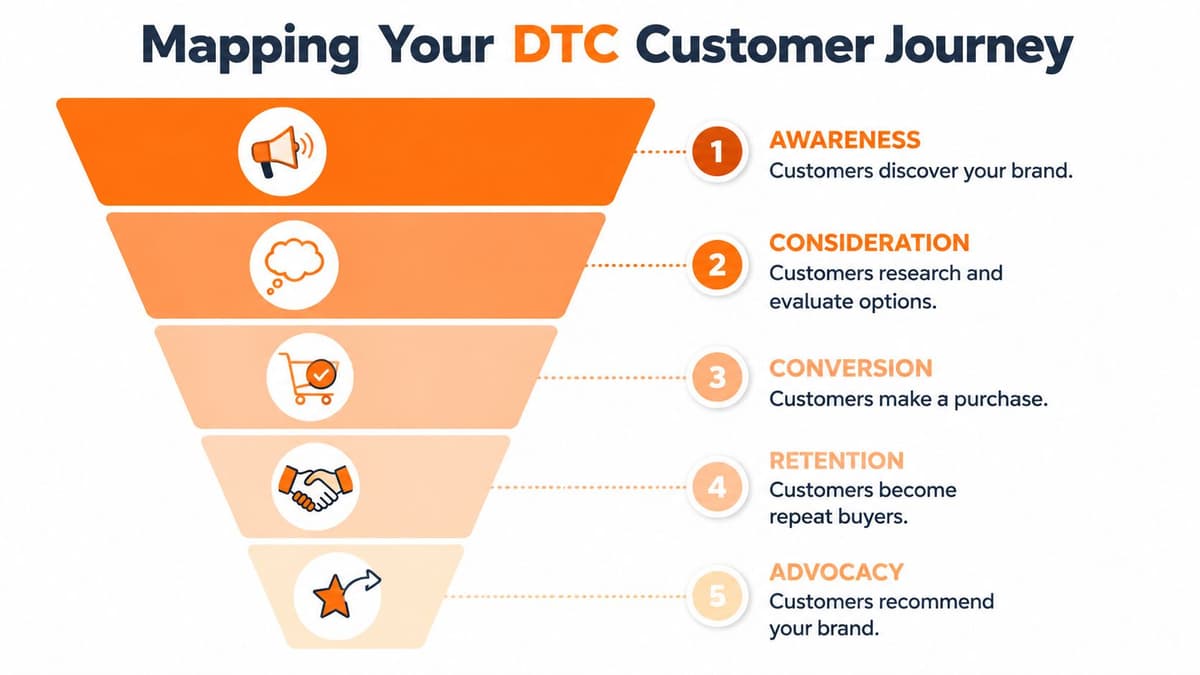
Most founders make this harder than it needs to be. The customer digital journey in DTC usually comes down to five stages: Awareness, Consideration, Conversion, Retention, and Advocacy.
That doesn’t mean every customer moves in a straight line. They don’t. It means these five stages give you a usable operating model for DTC journey management: understanding intent at each stage and assigning the right job to each channel.
#Awareness
At this stage, the customer is not trying to buy from you. They’re trying to notice something worth remembering.
Your job is simple. Earn attention with a clear problem-solution message. Paid social, creators, organic content, and upper-funnel video all live here. If your ads are clever but your offer is fuzzy, awareness won’t turn into anything useful.
#Consideration
Now the shopper is comparing. They’re checking your product page, reading reviews, looking at shipping details, maybe opening a few competitor tabs.
Many brands lose momentum here. They spend aggressively to get the click, then send people to a page that creates work. Weak product copy, confusing bundles, missing proof, and unclear guarantees all hurt consideration.
A good consideration experience answers the obvious questions fast:
- What is this
- Why is it better
- Will it work for someone like me
- What happens if I don’t like it
#Conversion
This is the moment many departments actively focus on, and fair enough. It’s where cash changes hands.
Still, conversion is usually the outcome of what happened earlier. If a shopper arrives with confidence, checkout should feel easy. If they arrive uncertain, no discount code in the world fixes the core issue.
Use this stage to remove friction, not to rescue a weak offer.
A quick visual summary helps:
#Retention
A first order is not proof of a healthy business. It’s proof that someone gave you one chance.
Retention starts right after purchase. Confirmation emails, shipping updates, onboarding, replenishment timing, support quality, and post-purchase cross-sell all shape whether that customer comes back. A lot of operators underinvest here because acquisition feels more exciting. That’s a mistake.
Retention usually breaks quietly. You don’t notice it in one bad day. You notice it after a month of weaker repeat revenue and higher pressure on paid acquisition.
#Advocacy
Advocacy is what happens when customers stop acting like buyers and start acting like supporters. They leave reviews, refer friends, post unprompted content, and defend your brand in group chats.
You can’t force this stage with a loyalty widget alone. Advocacy comes from a product that delivers, a post-purchase experience that feels trustworthy, and messaging that gives customers language they want to repeat.
Here’s the simplest way to think about the full journey:
| Stage | Customer goal | Your job |
|---|---|---|
| Awareness | Notice a promising option | Make the value obvious |
| Consideration | Evaluate risk and fit | Answer objections quickly |
| Conversion | Complete the purchase | Remove friction |
| Retention | Get the promised value | Reinforce the buying decision |
| Advocacy | Share a good experience | Give customers reasons to talk |
#The Key Metrics That Actually Signal Growth
Most dashboards are crowded because teams confuse available metrics with useful metrics. That’s how founders end up watching bounce rate, time on site, and channel-level ROAS while missing the signals that explain revenue movement.
When customer journey signals sit in separate tools, teams miss 30-50% of at-risk customers due to delayed visibility, and unifying touchpoint data can reduce churn by up to 15% in DTC brands through proactive interventions based on KPI-defined stages, according to Gainsight’s view of the digital customer journey.
#Stop tracking everything
You do not need twenty KPIs per stage. You need one primary signal per stage, plus context. This is the analytics half of journey intelligence, and it is where most DTC journey analytics setups go wrong: they track everything and prioritize nothing.
The right metric is the one that tells you whether the customer is moving forward or stalling. Vanity metrics look active. Journey metrics show intent.
If you want a broader KPI framework for ecommerce teams, this breakdown of ecommerce KPIs that matter is a useful companion.
#DTC journey stages and key metrics
Here’s the table I’d use with a founder who wants signal over noise.
| Stage | Primary Metric | What It Tells You |
|---|---|---|
| Awareness | Qualified traffic trend | Whether you’re attracting visitors who match your offer, not just cheap clicks |
| Consideration | Add to cart rate | Whether product pages and offers create enough buying intent |
| Conversion | Checkout completion rate | Whether buyers who want the product can actually finish the purchase |
| Retention | Repeat purchase trend | Whether the product and post-purchase experience earn a second order |
| Advocacy | Review and referral activity | Whether customers value the experience enough to recommend it |
A few opinions here matter.
Add to cart rate is usually more useful than time on page. Time on page often means confusion, distraction, or tab abandonment. Add to cart tells you the offer made sense.
Checkout completion is more useful than total conversion rate when you’re diagnosing purchase issues. Total conversion rate blends traffic quality with site friction. Checkout completion isolates the buying experience itself.
Repeat purchase trend matters more than open rates in retention. Email metrics can help diagnose delivery and messaging, but they’re not the goal. The goal is whether customers return.
Watch movement between stages, not isolated numbers. Growth usually breaks at the handoff.
That handoff mindset matters because the customer digital journey isn’t one report. It’s a chain. If awareness quality drops, consideration falls later. If conversion friction rises, retention weakens because fewer first-time buyers make it through. If repeat purchase slips, your acquisition engine has to work harder just to stand still.
#High-Impact Optimization Tactics for Shopify Stores
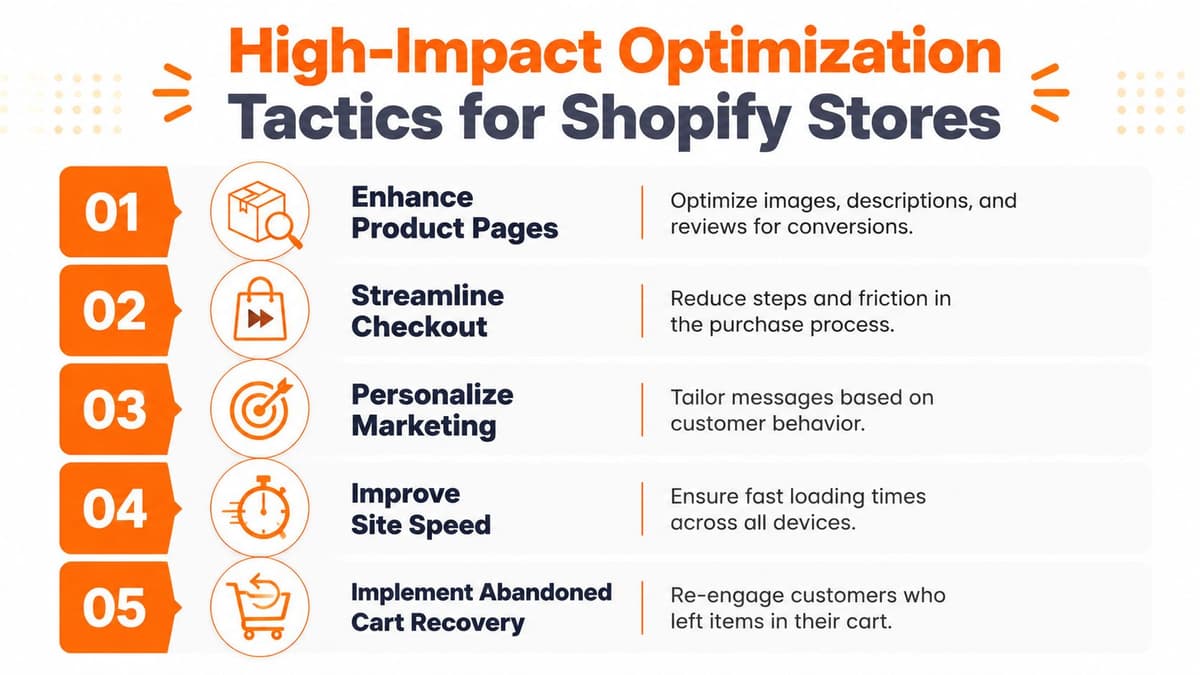
Most Shopify growth work should fall into three buckets: get better traffic, remove buying friction, and protect repeat revenue. That’s it. Founders get in trouble when they scatter attention across ten experiments that don’t connect to a journey bottleneck.
Friction points in customer journeys cause 62% of e-commerce abandonment, behavioral patterns like rage clicks or error loops reduce conversion rates by 15-20%, and a 3-second page load delay in checkout increases bounce by 32%, according to Quantum Metric’s analysis of journey friction.
#Acquisition that brings the right traffic
Founders often ask how to “scale traffic” when the issue is traffic mismatch.
If your paid social creative promises one thing and the landing page delivers something softer, your customer digital journey breaks before consideration even starts. The fix isn’t always more spend. Sometimes it’s message matching.
Focus on these moves:
- Tighten ad-to-page continuity: Keep the offer, language, and product promise consistent from click to landing.
- Split traffic by intent: Send colder traffic to educational or proof-heavy pages. Send warmer traffic to product-first pages.
- Cut misleading winners: Some ads generate clicks cheaply but attract visitors who never behave like buyers.
If TikTok is part of your acquisition mix, this practical guide to running ads on TikTok for ecommerce is useful because platform-specific creative often changes journey quality more than budget does.
#Conversion fixes that remove friction
Most quick wins live here.
Don’t start with a redesign. Start with evidence. Watch session replays. Check heatmaps. Look for rage clicks, repeat taps, dead elements, promo code failures, and weird mobile form behavior. Those are not “UX issues” in the abstract. They’re revenue leaks.
The best conversion fixes are usually boring:
- Fix broken or confusing checkout fields
- Shorten the gap between product promise and proof
- Reduce load time on high-intent pages
- Clean up variant selection and bundle logic
- Make shipping and return terms easier to find
If customers are trying to buy and your store makes them think, you’ve already lost momentum.
A lot of teams waste weeks debating homepage changes even as mobile checkout underperforms. Start where intent is highest. Product pages, cart, checkout, and mobile handoffs deserve attention before broad brand polish.
#Retention work that protects margin
Retention is where founders either build durability or keep paying for the same customer twice.
The most impactful retention improvements usually aren’t flashy. They’re operational. Better replenishment timing. Smarter post-purchase education. Faster support on issues that block second orders. Segments based on actual buying behavior instead of broad newsletter buckets.
A few practical plays:
- Audit post-purchase flows: Make sure first-time buyers get onboarding, reassurance, and a clear next step.
- Treat support as journey data: Repeated complaints about sizing, shipping, or product use often explain repeat-purchase problems.
- Prioritize save moments: If subscriptions, replenishment, or repeat bundles matter to your model, identify where customers hesitate before reorder.
For teams thinking more about post-purchase drop-off, these strategies to prevent churn are a useful complement.
The big takeaway is simple. Don’t optimize where it’s convenient. Optimize where buyer intent is already strong and friction is still getting in the way.
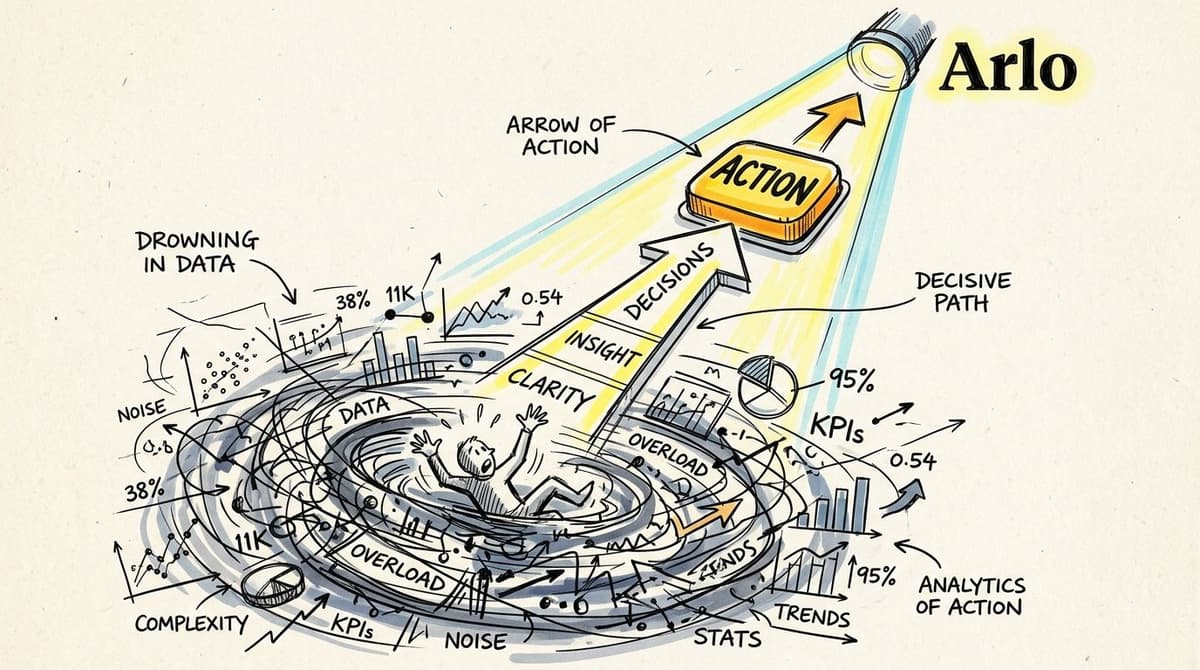
#From Data Overload to Decisive Action with Arlo
At some point, every founder hits the same wall. You understand the journey. You know the stages. You know the key metrics. But you still don’t have time to pull data from Shopify, ad platforms, email, product analytics, and support trends every week and turn that into one decision.
That’s why AI is becoming practical in journey intelligence. Companies using AI-powered customer journey mapping tools see a 25% increase in customer satisfaction and a 15% increase in revenue, and in 2024 AI adoption in organizations rose to 72%, with 65% regularly using generative AI in at least one business function, according to this overview of AI-driven customer journey mapping.
#Why AI is now practical
The value isn’t “AI” as a buzzword. The value is speed to clarity.
A useful system should do three things. First, detect what changed. Second, explain why it matters. Third, recommend the next action in plain English. If it can’t do those three things, it’s just another dashboard with better branding.
That’s especially true for founders who aren’t sitting with an in-house analyst. You need a fast read on the biggest opportunity or risk, not a pile of charts.
#What useful automation actually looks like
A solid workflow looks like this:
- It monitors the journey across stages: traffic quality, onsite behavior, conversion, and repeat purchase patterns.
- It surfaces the strongest signal: not every fluctuation, just the change that deserves attention.
- It ranks actions by business impact: fix this checkout issue first, pause that weak campaign second, protect this winning product page third.
If you’re evaluating what strong analytics should look like in practice, this perspective on analytics in ecommerce gets the point right. Raw reporting isn’t enough. Interpretation is the hard part.
Here’s my opinion. Most brands don’t need more data collection. They need fewer, better decisions. The customer digital journey becomes manageable when someone, or something, translates messy signals into a weekly action list you can execute.
#Your Weekly Rhythm for Journey Optimization
Journey work falls apart when founders treat it like a quarterly project. It works when it becomes a weekly habit.
You do not need a massive workshop. You need a repeatable rhythm that turns the customer digital journey into one focused decision at a time.
#A simple 20 minute review
Use this cadence every week:
-
Review one source of truth
Look at a single report or dashboard summary that spans acquisition, conversion, retention, and product performance. If you have to open six tabs, your system is already too fragmented. -
Pick the biggest bottleneck
Don’t chase five issues. Pick one. Maybe paid traffic quality slipped. Maybe mobile checkout friction rose. Maybe repeat purchase softened after a support issue. Choose the one that most likely affects revenue now. -
Assign one concrete action
Put time on the calendar and name the owner. Rewrite the landing page. fix a broken flow. pause a poor-fit campaign. simplify a product page. The action should be specific enough to complete this week.
The best growth teams aren’t the ones with the most dashboards. They’re the ones that can spot one important change and respond fast.
If you keep doing that, the customer digital journey stops feeling like a black box. It becomes operational. You’ll know where customers stall, where they build confidence, and where your next gain is likely to come from.
And that’s the true win. Not perfect attribution. Better decisions, made consistently.
If you’re tired of stitching together Shopify, ad, email, and product data by hand, Arlo is a DTC journey intelligence layer for Shopify stores. It turns raw store data into a concise weekly report that explains what changed, why it matters, and what to do next, with actions ranked by urgency and revenue impact.