10 Black Friday Marketing Strategies for 2026
By Arthur Falcone · Founder of Arlo
It is late October. Your team is debating discount levels, your agency wants bigger budgets, inventory is not fully locked, and last year's promo calendar is still sitting in a spreadsheet no one trusts. I've seen this before. Brands lose Black Friday profit long before the sale starts because they wait too long to make a few high-impact decisions.
Black Friday is no longer a one-day spike you can improvise around. Analysts at Salesforce found that global online sales hit $74.4 billion on Black Friday in 2024, and U.S. online sales reached $17.5 billion, as reported in Salesforce's holiday shopping results coverage by Digital Commerce 360. Bigger demand sounds good until you remember what comes with it: pricier clicks, crowded inboxes, thinner attention, and more brands training customers to wait for discounts.
That is why this guide is built as a ranked playbook, not a bloated idea dump.
You are getting 10 Black Friday marketing strategies ordered by two things that matter to a founder. Revenue impact and implementation urgency. Use it to decide what gets done this week, what can wait, and what is not worth touching if margin is already tight.
If your calendar is still scattered, use a simple event map like this tent pole events guide and work backward from your launch dates.
#Table of Contents
- 1. Early Access & Tiered Discount Strategy
- 2. Bundle & Cross-Sell Promotions
- 3. Flash Sale & Scarcity-Driven Urgency
- 4. Email Segmentation & Personalized Offers
- 5. Omnichannel Coordination & Consistent Messaging
- 6. Cart Abandonment & Last-Click Recovery
- 7. Post-Purchase Upsell & Repeat-Buy Incentives
- 8. Performance Monitoring & Real-Time Optimization
- 9. Competitive Positioning & Differentiation Strategy
- 10. Proactive Inventory & Supply Chain Management
- 10 Black Friday Marketing Strategies Comparison
- From Playbook to Profit Your Next Move
#1. Early Access & Tiered Discount Strategy
The fastest way to protect margin during Black Friday is to stop treating every customer the same. Your best buyers should not get the same message, timing, or offer as someone who joined your list yesterday.
Criteo reported that U.S. online sales on Black Friday were 288% higher than average October 2023 sales, and it recommends launching campaigns at the beginning of October because shoppers start researching well before the event. The same guidance pushes brands toward in-market audiences, lookalike audiences, and historical shopper data, which you can review in Criteo's Black Friday marketing strategy guide.
#Why this ranks first
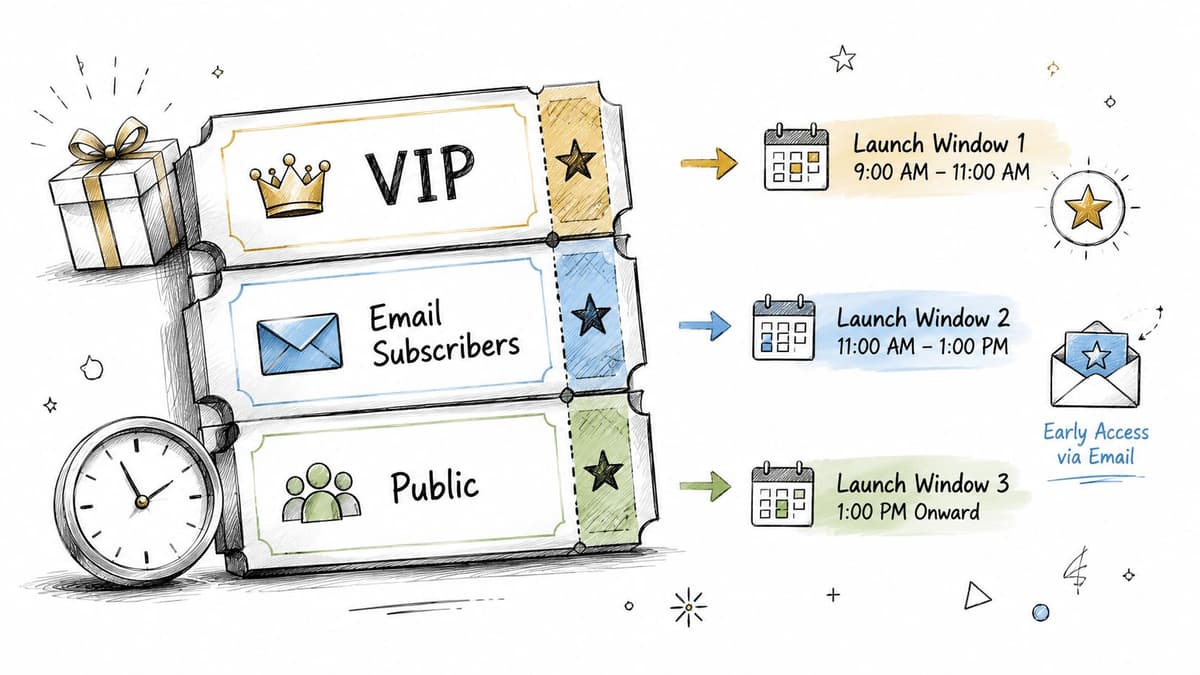
Early access creates multiple buying windows instead of one chaotic peak. VIP customers buy before your broad sale goes live. Subscribers who don't convert in wave one still have a reason to come back in wave two. Your general audience gets the public offer without seeing your deepest discount too early.
That structure does three things. It rewards your highest-value customers, smooths traffic across more days, and gives you live data before the loudest part of the weekend.
Practical rule: If you only have time for one pricing structure, build one offer for repeat buyers and one for everyone else. That's enough to outperform a blanket sale.
#What to set up this week
- Define VIP first: Pull repeat buyers, high-AOV buyers, and subscribers who opened or clicked recently.
- Set launch windows: Give VIPs first access, then email subscribers, then the public.
- Hold something back: Reserve bundles, limited SKUs, or better shipping perks for the early-access group.
- Write distinct messaging: VIP copy should feel like recognition. Public copy should feel like an event.
Don't overcomplicate the discount ladder. If your store isn't operationally strong, a simple sequence beats a clever one. Most founders lose money because they create too many phases to manage cleanly.
#2. Bundle & Cross-Sell Promotions
Your Black Friday traffic spikes. Orders come in. A week later, you realize too many customers bought a single discounted SKU and left. Revenue looked fine. Profit did not.
Bundles fix that fast.
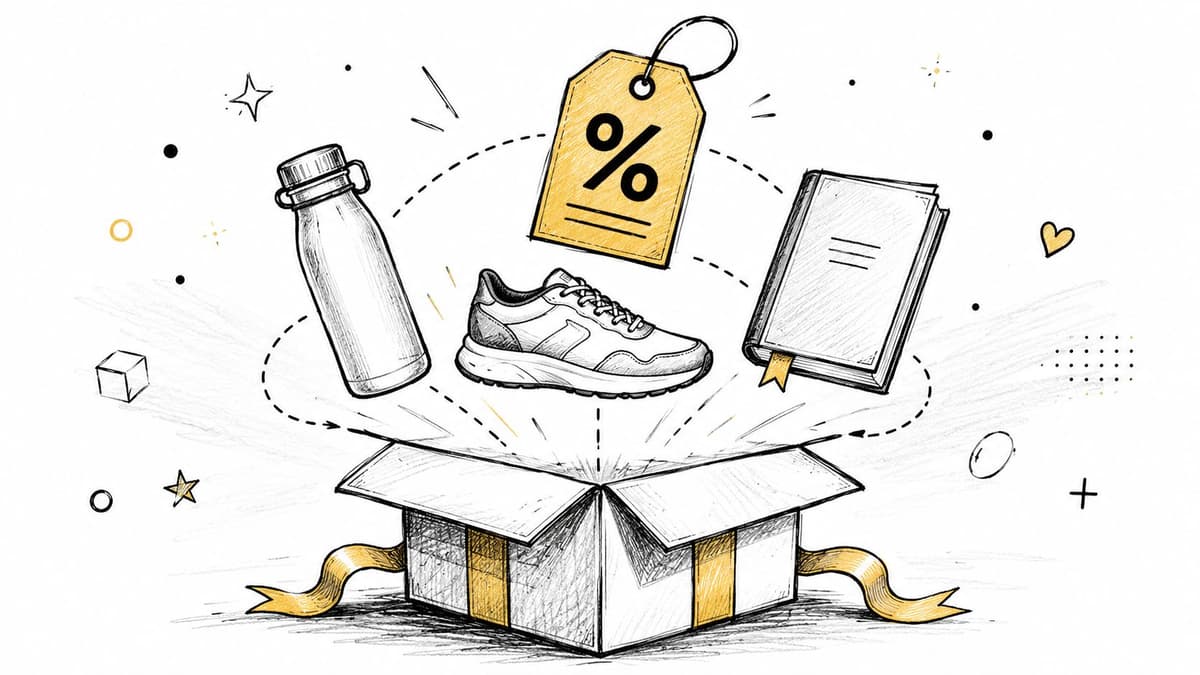
If you need one offer type that can raise average order value without turning your whole site into a clearance rack, pick bundles and cross-sells. They work best when you use them to guide the purchase, protect margin, and increase the value of each session you already paid for.
#Build offers around buying intent
A strong bundle removes a decision. It answers, "What should I buy with this?" before the customer has to think about it.
That is why starter kits, routines, refill pairs, and gift sets usually beat random multi-product discounts. The offer feels useful, not forced. Your hero SKU should stay at the center. Then add the item that improves first use, increases repeat purchase odds, or solves the next obvious need.
#Priority ranking
Revenue impact: High
Implementation urgency: High
Founders waste too much time tweaking discount percentages when the bigger win is offer design. A better bundle can outperform a deeper sitewide markdown because it raises units per order and gives the customer a clearer path to buy.
#Bundle rules that protect profit
- Start with one proven SKU: Build every bundle around a product that already converts.
- Match products by use case: Pair the main item with an accessory, refill, or complementary product that makes sense immediately.
- Name the outcome: "Starter Kit," "Travel Set," and "Gift Bundle" sell better than internal product language.
- Keep weak inventory out of sight: Bundles are not a dumping ground for slow movers.
- Set margin floors first: If a bundle cannot hold contribution margin after discounts, packaging, and shipping, kill it.
- Add cross-sells at the right moment: Product page, cart, and post-add-to-cart are the highest-value placements. Do not scatter them everywhere.
A good bundle increases order value because it makes the choice easier, not because it hides a bigger discount.
#What to set up this week
Keep this simple.
If you are a small DTC brand, launch two bundles max. One for new customers. One for existing customers who already trust the product and are more likely to add depth to their order. Beyond that, execution gets sloppy. Your landing pages get crowded, your email gets harder to write, and your ops team starts cleaning up avoidable mistakes.
Use this checklist:
- Choose your hero SKU
- Pick one logical add-on
- Write a use-case-based bundle name
- Show the savings clearly
- Place one cross-sell in cart
- Exclude products with fragile margin
- Check inventory coverage before launch
That is enough for most brands to improve Black Friday economics without adding operational chaos.
#3. Flash Sale & Scarcity-Driven Urgency
Urgency works. Sloppy urgency backfires.
During Black Friday, founders often overuse countdown timers, fake scarcity, and rotating discounts until the whole storefront starts to look untrustworthy. Don't do that. Flash sales should create momentum, not confusion.
#Use urgency with discipline
The strongest urgency comes from one of three places. A real time window, a real stock constraint, or a real bonus that expires. If none of those are true, don't manufacture drama.
Use a short flash sale when you need to concentrate demand around a specific product family, clear inventory with a plan, or give paid traffic a sharper conversion angle. Use it less for your hero SKU if that product already converts well under a broader event offer.
#When to use flash sales
A founder-led brand can run this with less pain if the scope is narrow.
- Choose a lane: Pick one collection, one bundle type, or one customer segment.
- Cap the operational load: Don't rotate offers every few hours unless your support and ops team can keep up.
- Match the creative: Site banners, email, SMS, and ads should all show the same clock and the same product focus.
- Prepare fallback copy: If inventory moves faster than expected, switch to waitlist, back-in-stock, or next-best-product messaging immediately.
Flash sales attract attention, but they also attract lower-intent bargain hunters if you rely on them too much. Use this strategy as a pressure valve, not your entire Black Friday identity.
#4. Email Segmentation & Personalized Offers
Email is where most DTC brands still have the most control. That only matters if the message feels relevant.
Broadcasting the same Black Friday campaign to every contact is lazy and expensive. Your recent first-time buyer, inactive subscriber, and loyal repeat customer don't need the same angle. If you're still sending one offer to everyone, fix that before you spend another dollar on traffic.
#Segmentation beats broadcast
Segmentation doesn't need to be advanced to work. Start with behavior. Bought recently, bought multiple times, browsed but didn't buy, lapsed customer, and never purchased. That's enough.
If you need a practical framework, review these customer segmentation examples for ecommerce brands. Then map each segment to a different reason to buy now.
#The segments to build first
- Recent customers: Sell complements, not the same product again.
- High-value repeat buyers: Give early access, stronger bundles, or first shot at limited stock.
- Lapsed buyers: Lead with the product they used to love, plus a clear reason to return.
- Engaged non-buyers: Remove friction. Highlight bestsellers, social proof, shipping clarity, and simplified offers.
Your subject lines should also change by segment. A VIP buyer should feel invited in. A cold subscriber should get a straightforward value proposition.
Relevance beats cleverness in November.
If your ESP supports dynamic blocks, use them. If it doesn't, duplicate the campaign and keep the logic manual. The point is not sophistication. The point is sending the right product and the right incentive to the right person.
#5. Omnichannel Coordination & Consistent Messaging
Most Black Friday campaigns don't fail because the offer is weak. They fail because the customer sees one discount in an ad, another in email, a third on the site banner, and no clarity in checkout.
That inconsistency kills trust at exactly the wrong moment. Buyers are already comparing tabs, screenshots, and price alerts. If your message changes by channel, you make the decision harder.
#Why coordination matters
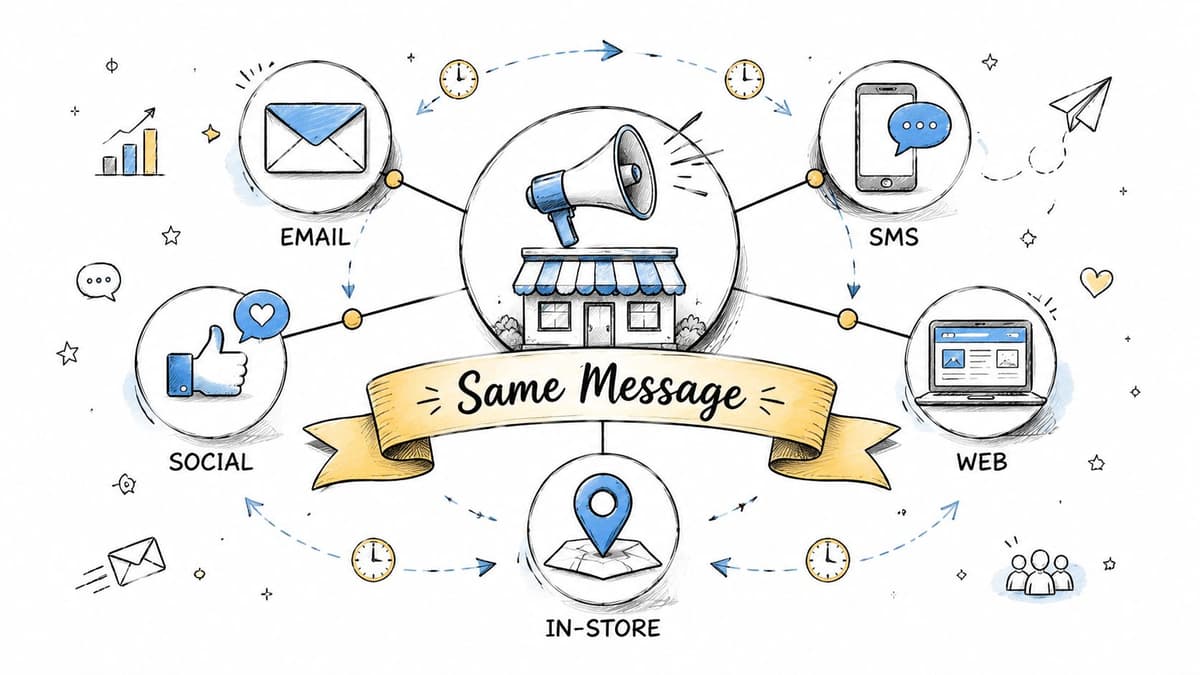
Your customer doesn't experience “channels.” They experience one brand. So your sale name, timing, hero products, exclusions, shipping message, and visual language need to line up everywhere they encounter you.
That doesn't mean every channel should say the exact same thing. It means every channel should reinforce the same offer logic.
#A founder-proof coordination system
Use one campaign document with these fields locked before launch:
- Offer summary: Main offer, thresholds, exclusions, launch times.
- Hero products: The SKUs or bundles every channel should push first.
- Creative kit: Final headline, subheadline, CTA, and approved visual assets.
- Support language: Shipping cutoffs, returns stance, promo code rules, and FAQ answers.
Then assign one owner to approve changes. Not three owners. One. The fastest way to break a campaign is to let email, paid social, and site merchandising all freelance the message in parallel.
If your team is small, simplify even more. One campaign theme. One hero collection. One public offer. Repetition wins during Black Friday.
#6. Cart Abandonment & Last-Click Recovery
This is the easiest money on the board because these shoppers already told you what they wanted. They visited the product page, added to cart, and got close enough to purchase that something small may have stopped them.
That “something small” matters more on mobile and during traffic spikes. The market guidance around Black Friday keeps repeating mobile-first advice, but the primary issue is operational friction under heavy load. Shopify saw record sales volume across its merchant base during the 2024 holiday period, and Adobe's 2024 holiday forecast said mobile devices would account for a record share of online holiday spending, as summarized in Taboola's Black Friday strategy article.
#Recover the easiest money first
Before you obsess over top-of-funnel volume, tighten recovery. If mobile checkout, Shop Pay, Apple Pay, discount code fields, or shipping calculators create friction, your abandonment flow ends up compensating for problems that should have been fixed at the source.
Recovery still matters. It just works best when it follows a clean checkout.
#Your recovery stack
Use automation, not manual follow-up. If you need a starting point for that setup, this guide on small business marketing automation is worth reviewing.
- Email first: Send the product reminder while the session is still fresh.
- SMS second: Reserve this for opted-in shoppers and higher-intent carts.
- Retargeting third: Show the exact item left behind, not a generic sale graphic.
- Shorten the path back: Every recovery message should return the shopper to a pre-filled cart or the exact product page.
Don't train customers to abandon for a discount. Start your recovery sequence with convenience, clarity, and urgency. Only escalate incentives if margin allows and the cart value justifies it.
#7. Post-Purchase Upsell & Repeat-Buy Incentives
Most Black Friday plans stop at the first purchase. That's a mistake.
A lot of brands brag about record weekend revenue, then realize in January that the cohort they bought was low quality and margin-thin. The smarter move is to treat Black Friday as the start of a retention sequence, not the finish line.
#Why retention belongs in your Black Friday plan
Independent commentary around holiday trading keeps making the same point. Revenue can rise while profitability gets squeezed if your sale attracts pure deal-seekers who never come back. Adobe's 2024 holiday shopping forecast projected U.S. online holiday spend at $240.8 billion, but the more useful founder question is the one raised in Bamboo Nine's Black Friday campaign tips: which tactics bring first-time buyers with the best repeat-purchase potential?
That's the right lens. Not just ROAS. Customer quality.
#What to trigger after checkout
For Shopify brands, the simplest win is the post-purchase complementary offer. In a global analysis of 15,000 Shopify stores during the 2024 holiday season, merchants using automated email upsell flows within 2 hours of checkout saw 34% higher AOV than stores using static blasts, and conversion rates increased 22% when the upsell used a dollar discount rather than a percentage message. That same benchmark said API latency should stay under 500ms between purchase confirmation and email dispatch.
Use that insight directly:
- Send quickly: The upsell should arrive while purchase intent is still active.
- Recommend complements: Accessories, refills, consumables, or care products work better than random catalog pushes.
- Use dollar savings when relevant: “Save $15” is easier to process than a percentage in a busy inbox.
- Build a second-order path: Include a clear reason to come back after the upsell window closes.
If you sell replenishable products, subscriptions or timed reorder reminders are particularly effective. If you sell occasional-purchase products, use loyalty enrollment or accessory education instead.
#8. Performance Monitoring & Real-Time Optimization
It's Friday morning. Traffic is up, spend is climbing, and one weak link can erase the margin you planned to make all month.
Your job is not to admire the dashboard. Your job is to make faster profit decisions than your competitors.
Founders lose money here in a predictable way. They watch too many metrics, react to every dip, and keep feeding campaigns that look busy but convert poorly. Black Friday rewards a short scoreboard and clear intervention rules.
#Build a profit-first command center
Track five things live, and ignore the rest unless one of these breaks:
- Revenue by hour: Measure pacing against your forecast, not against hope.
- Conversion rate by device: Mobile issues destroy revenue fast.
- Spend split by campaign type: Keep prospecting, retargeting, and branded search separate so you can cut waste without guessing.
- Checkout errors: Payment, shipping, and discount-code problems need immediate attention.
- Support volume and complaint themes: Customers often spot operational problems before your reporting stack does.
If you need a cleaner way to structure reporting, this guide to analytics in ecommerce is a useful starting point.
#Set rules before the spike hits
Do not make major changes every hour. Make predefined moves when a threshold gets hit.
Use a simple operating checklist:
- If conversion drops but traffic holds, inspect checkout, page speed, discount logic, and mobile UX first.
- If retargeting is outperforming prospecting, shift budget toward warmer traffic before you increase top-of-funnel spend.
- If AOV falls, check whether a low-value offer, weak bundle mix, or aggressive coupon is dragging order quality down.
- If support tickets spike, pause message changes and fix the operational issue customers are reporting.
- If a campaign spends fast without efficient sales, cut it early. Do not wait for the platform to "learn" during your highest-stakes weekend.
This is the section of your Black Friday plan that should feel strict, not creative.
You can also use a tool like Arlo to turn store and marketing data into a prioritized action list instead of jumping between dashboards manually. During a compressed sales window, that kind of triage helps you protect margin and move faster.
#9. Competitive Positioning & Differentiation Strategy
If your only Black Friday strategy is “match the market,” you're volunteering to lose on margin.
Bigger brands can usually discount harder, ship faster, and survive uglier contribution math than you can. Trying to out-Amazon Amazon is a bad plan. Competing on a sharper offer, clearer use case, better bundle, or stronger customer experience is the better route.
#Stop copying the market
The easiest way to disappear is to copy the same headline every other brand uses. “Biggest Sale of the Year” means nothing. “Up to X off” sounds like everyone else. Generic urgency disappears in the feed.
Your job is to answer one practical customer question better than competitors do. Why buy this from you, right now, instead of from them?
If your offer can be swapped with a competitor's logo and still make sense, it isn't differentiated enough.
#Ways to stand apart without racing to the bottom
- Lead with a use case: Gift-ready sets, starter systems, refill plans, or problem-solving bundles.
- Make fulfillment part of the offer: Fast shipping, easier returns, or better order communication can matter as much as the discount.
- Use plain-language guarantees: Spell out timelines, exclusions, and stock realities clearly.
- Promote values only if they're real: Sustainability, quality, and sourcing can help, but only when backed by the actual product and customer experience.
Differentiation doesn't need to be brand theater. It needs to reduce hesitation. That's what wins during a crowded event.
#10. Proactive Inventory & Supply Chain Management
You launch the campaign, orders spike, and your best-selling bundle is gone by noon. Customer support fills up. Paid traffic keeps spending. Refunds, split shipments, and angry "where is my order?" emails eat the profit you thought you made.
That failure starts before Black Friday.
Marketing sets demand. Operations sets the ceiling on how much of that demand turns into revenue you keep. If stock is shallow, bundle components are mismatched, or your 3PL cannot handle the surge, the sale breaks where it matters most: fulfillment.
Treat inventory planning like a revenue protection job, not a back-office task. You do not need a perfect forecast. You need a ranked plan for the SKUs that matter most, the dependencies that can break the offer, and the fallback options you will push if stock gets tight.
#What to lock before launch
- Rank SKUs by revenue impact: Identify your hero products, highest-margin bundles, and top repeat-buy items. Protect those first.
- Map bundle dependencies: One missing component kills the whole bundle. Check every item, including inserts, gift packaging, and free gift stock.
- Set substitution rules now: Decide what replaces a low-stock SKU, what discount stays the same, and who approves the switch.
- Confirm fulfillment limits: Get hard answers from your warehouse or 3PL on daily capacity, cutoff times, pick-pack constraints, and weekend staffing.
- Create a stock-triggered promo plan: If inventory drops below your threshold, pause ads, swap featured products, or shift to a backup offer immediately.
If your operations are under strain, read these strategies for distribution center operations and tighten the basics before you pour more budget into traffic.
One more founder rule. Do not build the sale around the products you want to push. Build it around the products you can fulfill cleanly, profitably, and on time.
That is how you avoid turning demand into damage.
#10 Black Friday Marketing Strategies Comparison
| Strategy | Implementation Complexity 🔄 | Resource Requirements ⚡ | Expected Outcomes ⭐📊 | Ideal Use Cases 💡 | Key Advantages ⭐ |
|---|---|---|---|---|---|
| Early Access & Tiered Discount Strategy | 🔄🔄🔄 High, multi-phase segmentation, tracking | ⚡⚡ Medium‑High, email automation, CRM, analytics | ⭐📊 Lift in LTV & AOV; multiple conversion windows; richer segment data | 💡 Brands with strong email lists/VIP programs aiming to protect margins | ⭐ Higher AOV; reduced peak traffic; stronger list engagement |
| Bundle & Cross‑Sell Promotions | 🔄🔄 Medium, bundle setup and UX adjustments | ⚡⚡ Medium, inventory coordination, pricing tests | ⭐📊 Typical AOV +15–40%; moves slow stock; improves discovery | 💡 Catalog brands, gifting categories, inventory clearance needs | ⭐ Boosts AOV; simplifies buying; improves cross‑category sales |
| Flash Sale & Scarcity‑Driven Urgency | 🔄🔄🔄 High, tight timing, real‑time inventory control | ⚡⚡⚡ High, ops, customer service, fulfillment robustness | ⭐📊 Rapid revenue spikes; fast inventory clearance; high conversion | 💡 High‑traffic sites or time‑sensitive clearance events | ⭐ Immediate conversions; strong urgency signals; email open lift |
| Email Segmentation & Personalized Offers | 🔄🔄🔄 High, data infrastructure and testing required | ⚡⚡ Medium, CRM/platform, content, analytics | ⭐📊 20–40% higher email conversion; better list health & ROI | 💡 DTC brands with behavioral data seeking high ROI channel | ⭐ Relevance‑driven conversions; lower unsubscribes; efficient spend |
| Omnichannel Coordination & Consistent Messaging | 🔄🔄🔄 High, cross‑team coordination and attribution | ⚡⚡⚡ High, creative, ad spend, integration tools | ⭐📊 50–80% lift with 3+ touchpoints; stronger brand recall | 💡 Brands active across web, app, paid/social and retail | ⭐ Cohesive experience; improved ad ROI; reduced customer confusion |
| Cart Abandonment & Last‑Click Recovery | 🔄🔄 Medium, timing-sensitive sequences | ⚡⚡ Medium, email/SMS automation, retargeting ads | ⭐📊 Recover ~20–35% of abandoned carts; lower CAC vs new users | 💡 High cart value merchants; checkout friction periods (Black Friday) | ⭐ High ROI; recaptures warm intent; surfaces checkout issues |
| Post‑Purchase Upsell & Repeat‑Buy Incentives | 🔄🔄 Medium, post‑purchase flows & subscription setup | ⚡⚡ Medium, fulfillment coordination, retention comms | ⭐📊 Improves repeat purchase rate and LTV; subscription uptake | 💡 Consumables, subscription‑friendly products, low‑LTV cohorts | ⭐ Converts one‑time buyers to repeat customers; predictable revenue |
| Performance Monitoring & Real‑Time Optimization | 🔄🔄🔄 Medium‑High, dashboards + pre‑set decision rules | ⚡⚡⚡ High, monitoring tools, dedicated staff, alerts | ⭐📊 Faster issue resolution; maximize ROI by reallocating spend | 💡 Short, high‑stakes events (48–72h) with significant ad budgets | ⭐ Prevents wasted spend; identifies technical failures quickly |
| Competitive Positioning & Differentiation Strategy | 🔄🔄 Medium, research and messaging alignment | ⚡⚡ Medium, competitor research, creative execution | ⭐📊 Attracts higher‑quality customers; protects margins vs price wars | 💡 DTC brands competing with larger discounting retailers | ⭐ Differentiates brand; avoids commoditization; improves loyalty |
| Proactive Inventory & Supply Chain Management | 🔄🔄🔄 High, forecasting, supplier & 3PL coordination | ⚡⚡⚡ High, capital for stock, logistics, real‑time visibility | ⭐📊 Prevents stockouts/overstock; reduces post‑event markdowns | 💡 High‑volume SKUs, seasonal product lines, fulfillment‑sensitive brands | ⭐ Ensures availability; protects revenue and customer satisfaction |
#From Playbook to Profit Your Next Move
Friday hits. Orders climb, support backs up, ad costs rise, and you still need to decide what deserves attention before margin slips.
Treat the weekend like an operating sprint. Rank every decision by two filters only: revenue impact and urgency. If a tactic does not protect profit this weekend or create repeat revenue next month, it drops down the list.
For most founder-led DTC brands, the priority stack is simple.
- Fix the offer.
- Recover high-intent checkouts.
- Create a second purchase path.
Start there. Skip everything that looks clever but takes too long to ship.
If you only have a few hours left to tighten the plan, use this shortlist:
- Choose one acquisition play with obvious payoff. Early access usually wins if your list has clear buyer history.
- Choose one conversion play that raises order value. Bundles usually beat storewide discounts because they protect margin and move more units per order.
- Choose one retention play before traffic spikes. Post-purchase upsells and repeat-buy incentives help November customers pay back acquisition costs in December and January.
That is the standard.
Do not judge the weekend by top-line revenue alone. Judge it by contribution margin, fulfillment stability, support load, and how many of these customers you would want back at full price. A busy weekend that creates refund risk, stockouts, and one-time bargain hunters is not a win.
Use this founder checklist today:
- Finalize one core offer and cut weaker promos
- Pick the two or three SKUs or bundles you want to push hardest
- Confirm stock, shipping limits, and support coverage before traffic peaks
- Test mobile checkout, cart recovery, and post-purchase flows end to end
- Set clear rules for cutting spend, increasing spend, or changing creative
- Give every channel one message so the campaign stays consistent
If you need help deciding what to fix first, Arlo helps Shopify brands turn store and marketing data into a ranked action list. That matters when you need priorities fast, not more dashboards.
The brands that come out of Black Friday with profit usually do fewer things, better. Make the offer clear. Protect checkout. Push for higher AOV and repeat purchase. Then execute without distraction.