8 Good Sentences Examples for Marketing Copy in 2026
By Arthur Falcone · Founder of Arlo
A shopper lands on your product page with three seconds of patience. Your ad earned the visit, your photos look sharp, and your product description covers every feature. But the headline says something any competitor could say: premium quality, thoughtfully designed, made for everyday life.
That's why one sentence can outperform an entire product page. A clear first line gives the shopper a reason to keep reading. A vague one leaves them searching for the benefit, the difference, or the catch.
For a founder-led Shopify store, that's an expensive writing problem. You're paying for traffic while asking visitors to work out why your product matters. Before buying more clicks, give them a sentence that answers a buying question.
The eight classic lines below offer useful patterns, not slogans to copy. Each becomes something practical: a product title, subject line, policy promise, button, or order update. Each also gets a metric to check in your weekly review.
Good sentences examples are useful only when you can explain what the sentence helps a customer understand or do.
Start with the page receiving paid traffic, not an obscure About page paragraph. Pair the copy change with the surrounding offer and layout, using conversion advice from Silva Marketing as a companion. Then judge the sentence by customer behavior, not by how clever it sounds.
#Table of Contents
- 1. "At 60 miles an hour the loudest noise in this new Rolls-Royce comes from the electric clock."
- 2. "We're number two. We try harder."
- 3. "Just Do It."
- 4. "Think different."
- 5. "Our blades are fing great."
- 6. "On the average, five times as many people read the headline as read the body copy."
- 7. "Well done is better than well said."
- 8. "The only thing we have to fear is fear itself."
- How Each Sentence Maps to Ecommerce Copy Use Cases
- Turn Five Sentences Into a Weekly Copy Test Routine
#1. "At 60 miles an hour the loudest noise in this new Rolls-Royce comes from the electric clock."
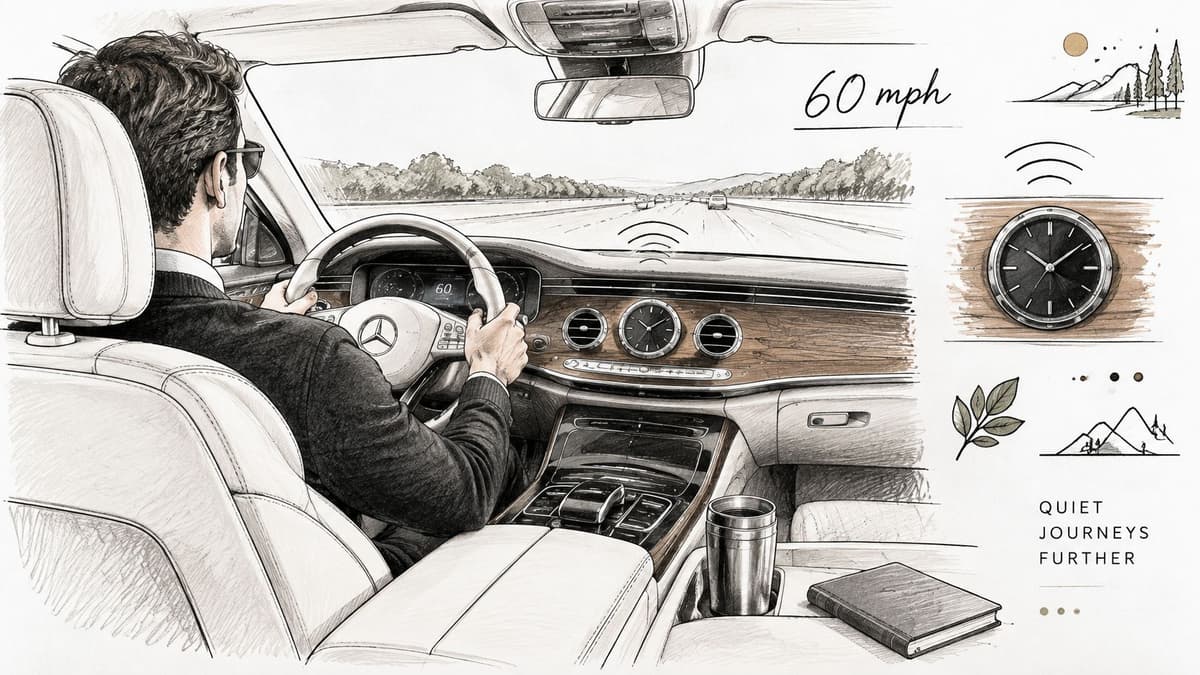
David Ogilvy wrote this Rolls-Royce headline for a 1958 print advertisement. Rather than describe the car as luxurious, he gave readers a quiet cabin they could almost hear.
The clock makes the claim concrete. A shopper doesn't need engineering knowledge to understand why that detail matters.
#Replace the adjective with something checkable
Say your Shopify store sells cotton shirts. Premium cotton shirts names a category but offers little reason to choose yours.
A more specific scenario might support Shirts that still look crisp after 40 washes, tested in our lab. That wording belongs on the page only if you've performed the test and can explain the conditions. Otherwise, use a detail you can substantiate, such as Cotton shirts with a collar that holds its shape.
For coffee, consider Your first sip is hot enough to notice the roast, not the burn. It's sensory, but it also suggests a temperature experience your beans alone may not control. Chocolate notes without a smoky finish is safer when it accurately describes the roast.
- Monday action: Search product titles and hero banners for premium, exceptional, and high-quality. Replace an unsupported adjective with a material, construction detail, or demonstrated benefit.
- Customer language: Find a specific review, get any needed permission, and preserve the customer's meaning when testing it as a headline.
- Weekly metric: Compare product-page conversion rate by variant, keeping traffic source, device, price, and stock availability visible.
Use these examples of good advertising copy to separate a persuasive detail from an impressive-sounding adjective. Specificity works when the evidence is stronger than the wording.
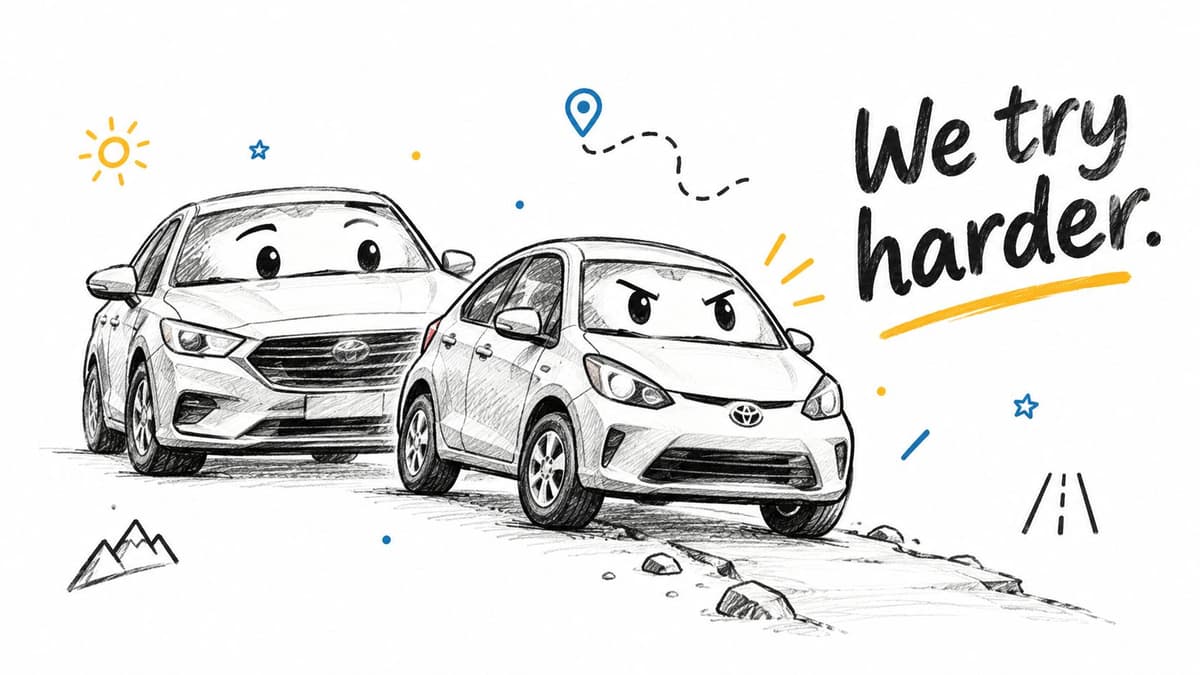
#2. "We're number two. We try harder."
The 1962 Avis Rent a Car campaign came from Doyle Dane Bernbach, with copy credited to Paul Foster and Samuel Meek. Avis acknowledged that it trailed Hertz, then gave customers a reason that disadvantage might benefit them.
That admission creates tension. The service promise resolves it.
#Turn a limitation into a service commitment
A small skincare brand might try We're not the biggest. We ship the fastest. The first sentence is easy to defend; the second demands evidence about competitors.
A more useful version is We're a small team. Your order gets personal attention. Support that claim with an actual service, such as a founder answering product questions or staff checking gift notes before dispatch.
For a subscription box, Not the cheapest box. The one that gets used. reframes price around usefulness. But the product selection must support it. Explain whether customers choose their contents, skip deliveries, or remove unwanted items.
Don't turn a weakness into a promise your operations team has to rescue.
Place the claim in your Shopify comparison section or beside the purchase decision. Don't bury the explanation on a separate page.
Your weekly review needs an operational measure and a commercial one. Track same-day dispatch rate if speed is the promise, then watch repeat purchase rate among customers who received that service. Average order value can be a secondary measure, but it won't prove that customers trust you.
The cost is operational discipline. If faster dispatch requires rushed packing and creates errors, the sentence has exposed a service problem rather than solved a marketing problem.
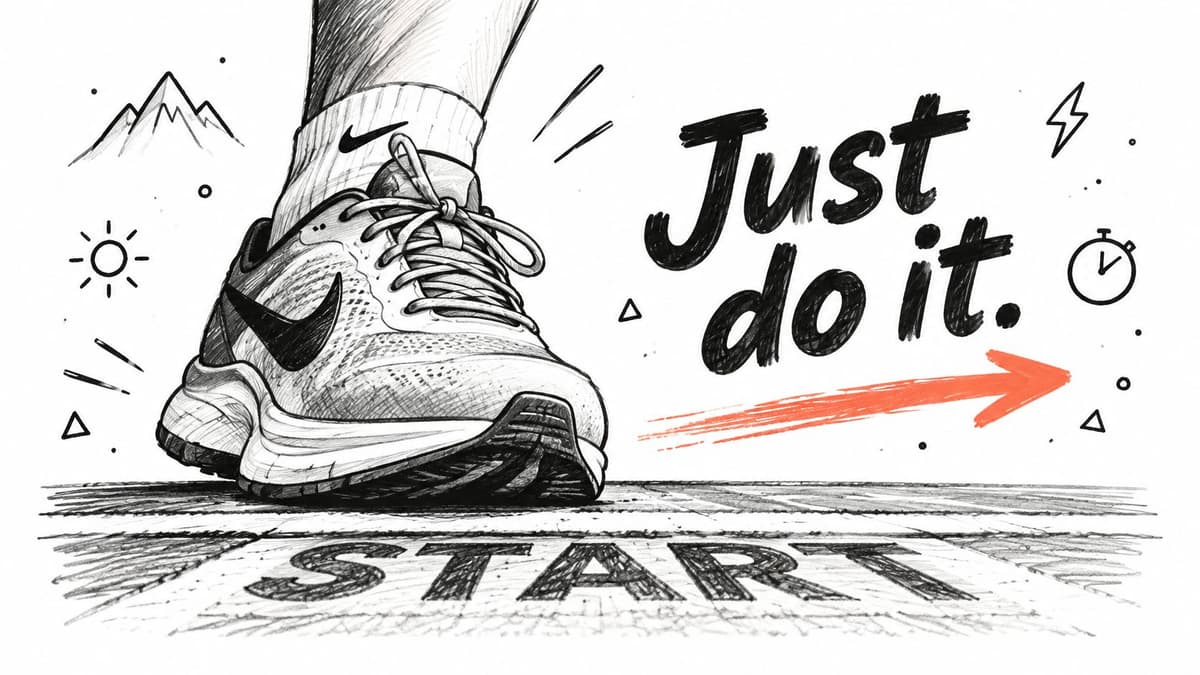
#3. "Just Do It."
Start Week One. Today. gives a fitness shopper a next step. Learn more gives them another reading assignment.
Nike's tagline, created in 1988 by Dan Wieden of Wieden+Kennedy, uses an imperative to make the reader the actor. Wieden said its origin included Gary Gilmore's last words before his 1977 execution, although Nike placed the phrase in a sports context. The useful copywriting lesson is the direct invitation to act, not that origin story.
#Name the action after the click
Match the command to what your Shopify page does.
- Product selection: Use Choose my size when the button opens a size selector.
- Subscription setup: Use Build my box when shoppers can select contents.
- Cart recovery: Test Your cart is waiting. Finish it. against a less forceful subject such as Your saved items are ready.
A sharp command can help a ready buyer. It can also feel pushy when someone still needs sizing, ingredient, or delivery information. Put that information within reach rather than trying to overcome uncertainty with louder wording.
Test imperative versus descriptive button text on a high-traffic page. Review click-through rate, then completed purchases. More button clicks aren't useful if shoppers leave at the next step.
Check the banner on a phone so your tagline doesn't truncate. Apply the same message discipline to your ads with this Facebook ad copywriting guide, and use these SEO tips for product slogans without replacing clear product language with a slogan.
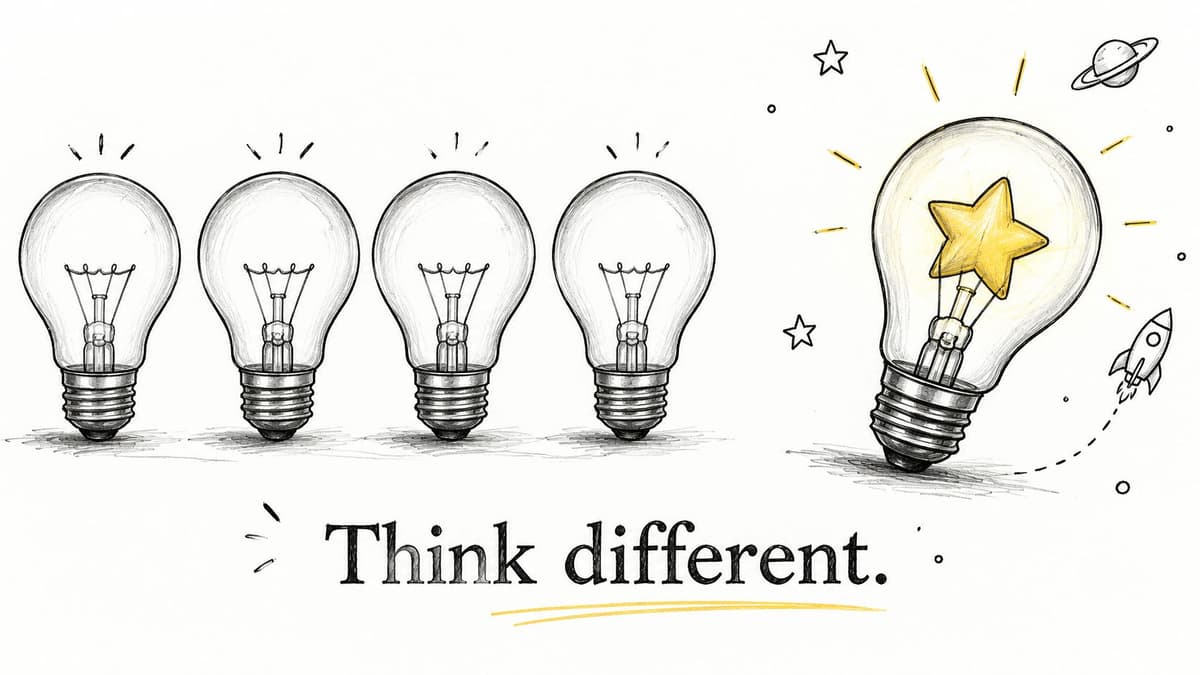
#4. "Think different."
Apple's 1997 campaign, developed by TBWA\Chiat\Day under Lee Clow, made identity the message. Its manifesto-style narration positioned Apple for people who challenged conventions.
The standard adverb would be differently. The deliberate departure helped express the attitude, but unusual grammar wasn't the whole strategy.
#Give the identity a product-level explanation
For a running shoe brand, Run your own race could express a community built around personal progress rather than competition. The supporting copy should explain what shoppers get: fit guidance, training resources, or community runs without pace requirements.
For a personality-led candle brand, Smell like yourself is distinctive but incomplete. Pair it with Choose a scent by mood, not by room if the collection actually helps customers shop that way.
Keep the imaginative line above a literal description. Your Shopify product title should still identify the product, scent, size, or relevant material. A shopper shouldn't need to decode your brand before finding a candle.
- Define the identity: Write down what your customer wants to express and what they'd reject.
- Show the support: Make your About page, imagery, assortment, emails, and ads consistent with that identity.
- Measure recognition: Review returning-customer conversion rate and repeat purchases for the relevant collection, while noting promotions and stock changes.
The trade-off is reach. A strong identity helps suitable customers recognize themselves, but it may make other shoppers feel excluded.
Don't rewrite every channel at once just to sound consistent. Start with a landing page and its matching email, then expand when customer response supports the direction. Consistency is valuable; consistently unclear copy isn't.
#5. "Our blades are f***ing great."
Dollar Shave Club opened its 2012 launch video with this blunt claim, written by co-founder Michael Dubin. The humor challenged expensive razor brands while establishing an unpretentious voice.
Profanity wasn't the transferable advantage. The sentence sounded like a person making a straightforward recommendation.
#Keep the confidence, earn the claim
A supplement brand could write Our protein tastes way better than you'd expect. That challenges a familiar objection, but it also assumes shoppers expect disappointment.
A more informative product-page line might be Chocolate protein without the chalky finish, provided the product supports that description. Keep taste claims separate from health claims, which need their own substantiation.
For pet food, Your dog will beg for this. Seriously. gives a playful tone. Follow it with useful buying information, including ingredients, suitability, feeding guidance, and how to switch foods.
Voice check: If the joke disappeared, would the sentence still give someone a reason to buy?
Test conversational hero copy against your current version while keeping the offer and creative stable. Watch new-customer conversion rate by traffic source, not just launch traffic. A funny campaign may attract viewers who never intended to buy pet food or protein.
Review whether the traffic and conversion pattern repeats or fades after launch. Check support messages and returns for signs that customers interpreted the joke as a stronger promise than you intended.
Use the voice consistently in email, SMS, and ads, but adjust it to the situation. A playful welcome message can work. A playful response to a damaged order can sound dismissive. You don't need a different brand personality for service problems, just better judgment about when humor helps.
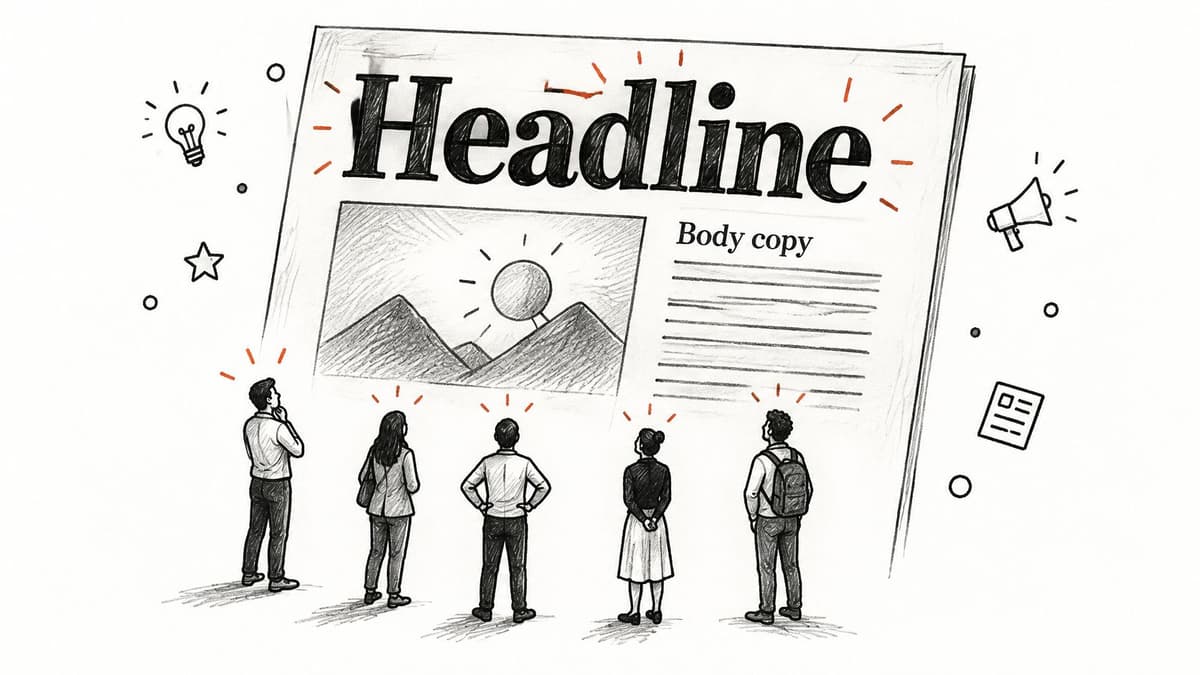
#6. "On the average, five times as many people read the headline as read the body copy."
David Ogilvy included this sentence in his 1963 book Confessions of an Advertising Man. He followed it with the observation that writing the headline meant spending eighty cents out of the advertising dollar.
Treat those historical statements as a reminder to prioritize the opening, not as a current benchmark for your store. Your own visitors, channels, and page layouts determine what happens next.
#Test relevance before cleverness
Your size is back in stock is a stronger subject-line candidate than New arrivals this week when the recipient requested that size. Without that context, it becomes misleading personalization.
For a product title, Wool Runner Socks is clear but broad. Wool Socks That Stop Blisters on 10-Mile Runs is more compelling, but it makes a performance claim that needs evidence. Without it, try Wool Running Socks With Flat Toe Seams if that construction is accurate.
The FTC's CAN-SPAM compliance guide prohibits deceptive subject lines in commercial email. Relevance isn't permission to imply an order, request, or relationship that doesn't exist.
- Isolate the headline: Keep body copy, offer, audience, and send conditions comparable.
- Review the funnel: Record subject-line open rate, click-through rate, and resulting purchases. Privacy protections make opens a directional measure.
- Check product behavior: Compare add-to-cart rate for title variants, then verify that completed purchases follow.
This guide to writing headlines can help generate alternatives. Choose versions that communicate different benefits, not merely different adjectives. Otherwise, you'll learn which phrasing won without learning much about what customers value.
#7. "Well done is better than well said."
A shipping promise is an operations decision before it's a copy decision. Benjamin Franklin's proverb, published in Poor Richard's Almanack in 1737, captures that distinction through balanced, plain wording.
On a policy page, eloquence matters less than whether customers can predict what will happen.
#Publish the promise you already meet
Say your fulfillment records support this statement: Shipped in under 24 hours for 96% of orders last quarter. That's stronger than Fast shipping promised, but only if the period, exclusions, and definition of shipped are clear.
A label printed isn't necessarily a parcel handed to the carrier. Likewise, Refunds processed within 3 business days should describe your processing time, not imply when the customer's bank will display the money.
Keep dispatch and delivery separate. Customers may reasonably read fast shipping as fast arrival unless you explain both.
- Verify the records: Compare Shopify fulfillment events with carrier acceptance and support records.
- Assign an owner: Have the person responsible for fulfillment or refunds approve the public promise.
- Review weekly: Track dispatch compliance, refund processing time, and related support contacts. Review the gap between promises and delivery monthly.
Publish a delivery metric only once you can meet it consistently. If performance slips, update the wording rather than hoping customers won't notice.
This is the point where stronger copy can cost real money. Earlier dispatch may require extra warehouse coverage; faster refunds may require clearer approval authority. Don't advertise either service unless you're willing to fund it.
The useful sentence isn't always the boldest one. It's the strongest accurate promise your team can keep during an ordinary busy week.
#8. "The only thing we have to fear is fear itself."
Franklin D. Roosevelt delivered this line in his first inaugural address on March 4, 1933, during the Great Depression. Its rhetorical power comes from naming a shared fear and reframing the obstacle.
Customer updates need a narrower version of that technique. Reassure people about what you know, not about what you hope will happen.
#Separate the problem from the feared outcome
For a confirmed shipping delay, Your order is delayed, not lost. Here's your tracking update. can reduce uncertainty. But don't say not lost unless the carrier information supports it.
When the parcel's location is uncertain, use Your tracking hasn't updated. We're checking with the carrier and will contact you again on the promised date. Replace the final phrase with an actual commitment your support team can meet.
For a subscription packaging change, a scenario might support The only thing that changes is the box. Your price stays the same for 12 months. Use that only when the price protection is real, and disclose any other changes.
Reassurance works when the next sentence gives the customer something concrete.
Pair the message with a tracking link, an effective date, a cancellation route, or a clear support option. A positive tone without an action can make customers feel trapped.
Delivery uncertainty deserves attention: Baymard's cart-abandonment findings report that 22% of shoppers cited slow delivery as a reason for abandoning checkout. Publish realistic delivery windows before purchase, not just explanations afterward.
Review delivery-related support tickets, refund requests, and subscription churn after messaging changes. Compare rates among affected customers, not raw totals alone. Fewer tickets aren't a success if customers have stopped expecting help.
#How Each Sentence Maps to Ecommerce Copy Use Cases
| Item | Best Use | Where to Place It | Metric to Track |
|---|---|---|---|
| “At 60 miles an hour the loudest noise in this new Rolls-Royce comes from the electric clock.” | Make a product claim specific and credible | Product titles, product pages, hero banners | Product page conversion rate |
| “We're number two. We try harder.” | Reframe a competitive weakness as a service strength | Comparison pages, “Why us” sections | Average order value or repeat purchase rate |
| “Just Do It.” | Prompt a clear, immediate action | Calls to action, buttons, mobile banners | Click-through rate |
| “Think different.” | Build an identity-led brand message | Brand story, About page, product pages, emails, and ads | Brand recognition over time |
| “Our blades are f***ing great.” | Capture attention with a bold, conversational claim | Launch videos, homepage hero copy, ads | New-customer conversion rate |
| “On the average, five times as many people read the headline as read the body copy.” | Prioritize and test headlines | Product titles, email subject lines, homepage hero | Open rate, click-through rate, or add-to-cart rate |
| “Well done is better than well said.” | Align public promises with operational results | Shipping policies, returns pages, and service claims | On-time shipping or support response time |
| “The only thing we have to fear is fear itself.” | Reassure customers and reframe concerns | Pricing updates, delivery notices, and return policies | Refund requests, support tickets, or churn |
#Turn Five Sentences Into a Weekly Copy Test Routine
Start with three swaps this week: rewrite one product title with a specific, checkable detail, replace one promotional subject line with a concrete offer, and publish one delivery or returns promise you already meet. Record the baseline conversion rate, subject-line open rate, and refund or support volume. Compare them again after 14 days, treating that as a review point rather than an automatic verdict.
Keep sentences that improve the relevant metric without creating another problem. Retire versions that disappoint customers, and extend tests when the result is unclear. A weekly report such as Arlo's 20 Minute CMO summary can flag metric shifts and estimate the associated revenue opportunity, but a shift alone doesn't prove that copy caused it.
#Give each sentence a job
Build a working set of five sentences: a product title, hero headline, promotional subject line, service promise, and order-status update. You don't need to test them all simultaneously. Choose the one attached to your most important customer problem.
- Product title: Check whether shoppers understand what makes the item suitable for them. Review add-to-cart rate and completed purchases.
- Hero headline: Match the promise to the traffic source. Review landing-page conversion by device.
- Subject line: State a real offer or relevant event. Review clicks and orders alongside opens.
- Service promise: Confirm that operations can deliver it. Review compliance and related support contacts.
- Status update: Explain what happened and what happens next. Review repeat contacts, refunds, and cancellations among affected customers.
Save the original wording, revised wording, launch date, audience, and intended outcome in a shared test log. Note discount changes, stockouts, campaign launches, and delivery disruptions. Otherwise, someone may credit a sentence for a result caused by a promotion or inventory change.
#Don't promote noise into a winning result
Use randomized A/B tests when your tools and traffic allow them. Before-and-after comparisons are useful for spotting problems, but they're weaker evidence when other conditions change.
Read effect size and significance explained before calling a small difference a win. Decide what improvement would justify the implementation cost, and don't stop a test merely because an early result looks encouraging.
Monday morning's work is simple: choose a buying question, write a clearer answer, verify the promise, and assign a metric. The goal isn't to collect famous lines. It's to make your store easier to understand and your copy decisions easier to defend.
Arlo offers an AI-powered marketing analyst for Shopify merchants, turning store signals into a weekly 20 Minute CMO report with prioritized actions and estimated revenue opportunities. Visit Arlo to connect your copy tests with changes in sales, traffic, customer behavior, and product performance.